Every living being, whether a fruit fly or a blue whale, begins as a single cell. Within this tiny starting point lies the full potential for a highly complex organism, and from it an entire body with countless specialized cells will gradually unfold. The ancient Greeks marveled at this transformation: Aristotle himself studied chick embryos, carefully opening eggs day by day to watch a formless blob become a living animal.
In this module, we explore how nature turns information into form.
One Genome - Many Cells
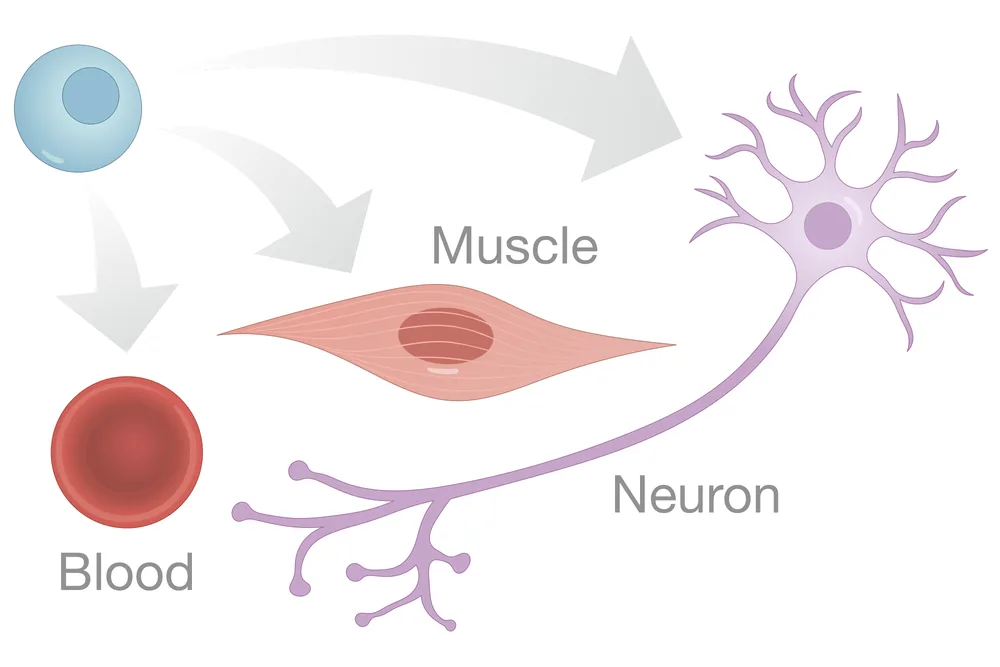
All cells in an organism contain the same DNA, yet they can look and behave very differently. A neuron stretches long electrical cables across the body, while a red blood cell is a tiny disc packed with hemoglobin. The key lies not in the genes themselves but in which ones are active. During development, cells switch specific genes on or off, defining their role as muscle, neuron, skin cell, and so on. One genome creates the immense diversity of tissues within a living body.
Signals from neighboring cells and chemical marks on DNA guide these decisions. The genome functions like a shared musical score, while each cell performs only its own part. Transcription factors, signaling molecules, and epigenetic changes ensure the right notes are played at the right time, creating the harmony of development that turns genetic information into form and behavior.
Nuclear Reprogramming
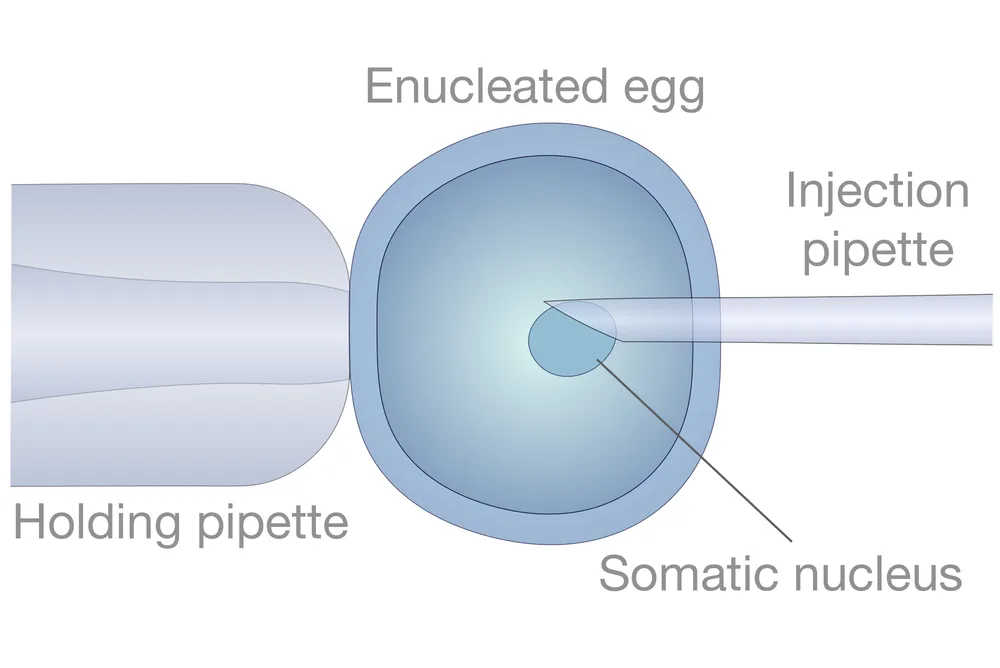
But how do we know that differentiated cells still retain all the genetic information? Classic experiments by Robert Briggs, Thomas King, and later John Gurdon provided astonishing proof. They showed that the nucleus of a fully differentiated frog cell, when placed into an enucleated egg, can give rise to a whole new organism. Development is not about gaining or losing genes, but about interpreting the same information in different ways across space and time.
Three Pillars of Development
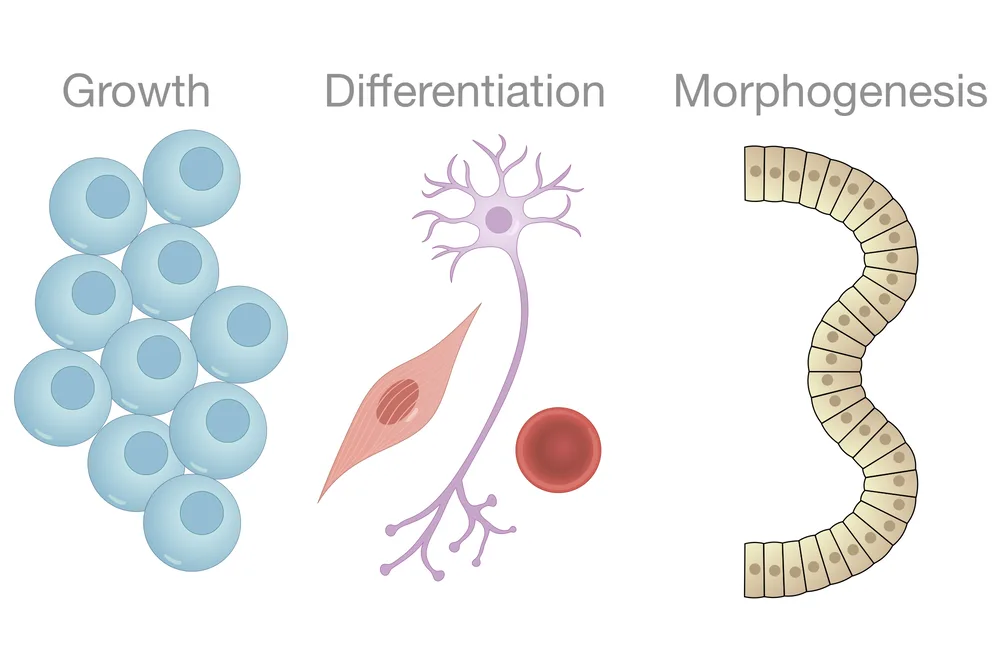
Once an embryo begins to divide, coordination becomes essential. Development proceeds through three connected processes: growth, differentiation, and morphogenesis. Growth increases the number and size of cells. Differentiation gives them specific identities through coordinated gene expression programs. And morphogenesis, perhaps the most wondrous of the three, organizes cells into tissues and organs by directing their movement, folding, and adhesion. Together, these processes transform a simple cluster of cells into a structured living form.
Animals and Plants
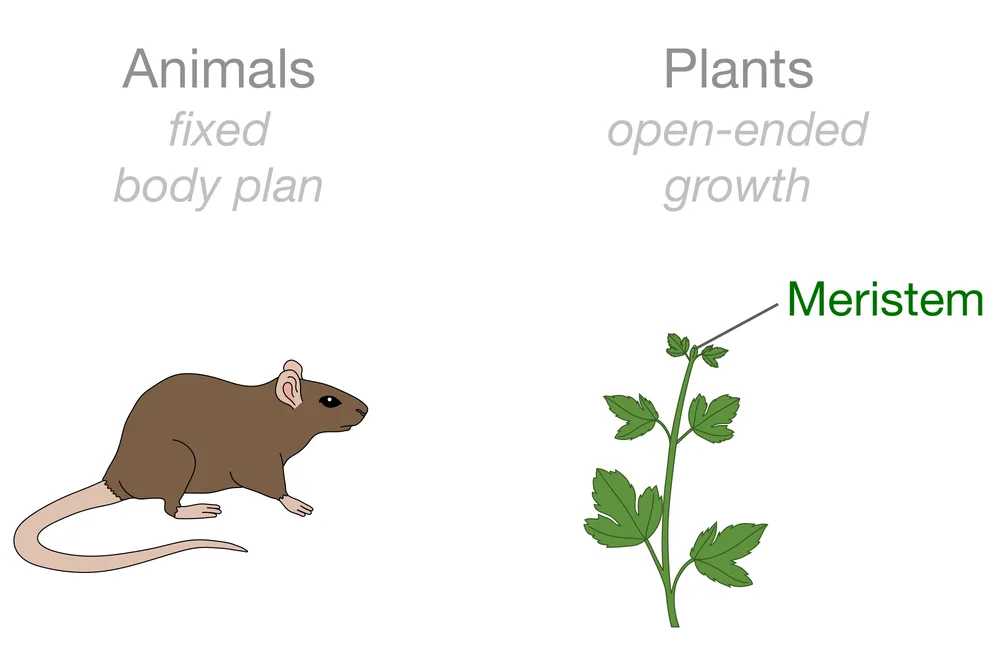
Animals and plants rely on similar molecular principles but follow very different developmental paths. Animals form most of their body plan early in embryogenesis, and once tissues and organs are established, cells largely remain fixed in their roles. Plants, in contrast, continue developing throughout life. Their meristems, small regions of stem cells at the tips of roots and shoots, constantly produce new leaves, roots, and flowers. An old oak tree is still actively developing, a reminder that life's construction project is never truly finished.
Continuous Change
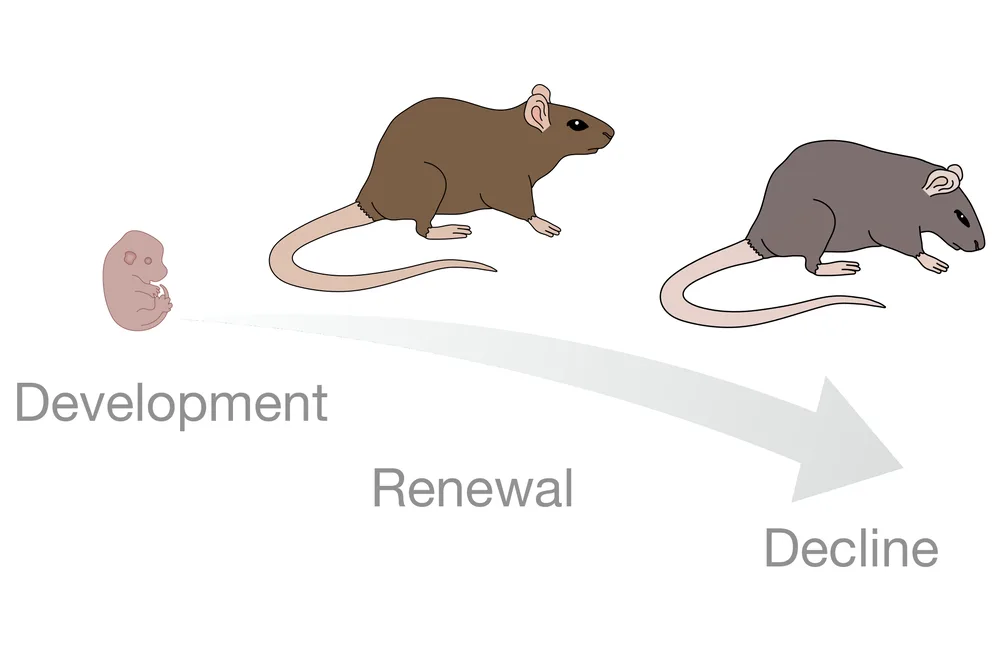
Even in animals, development does not end at birth. The same biological logic that built the embryo continues to maintain the adult organism. Some tissues, such as skin or the intestinal lining, renew constantly, while others, like neurons, remain largely stable. Over time, molecular damage and gradual changes in gene control reduce the body's capacity for renewal, and we call this aging. From the first division of the zygote to the final stage of life, development remains a continuous transformation that connects every phase of existence.
A Journey Through Development
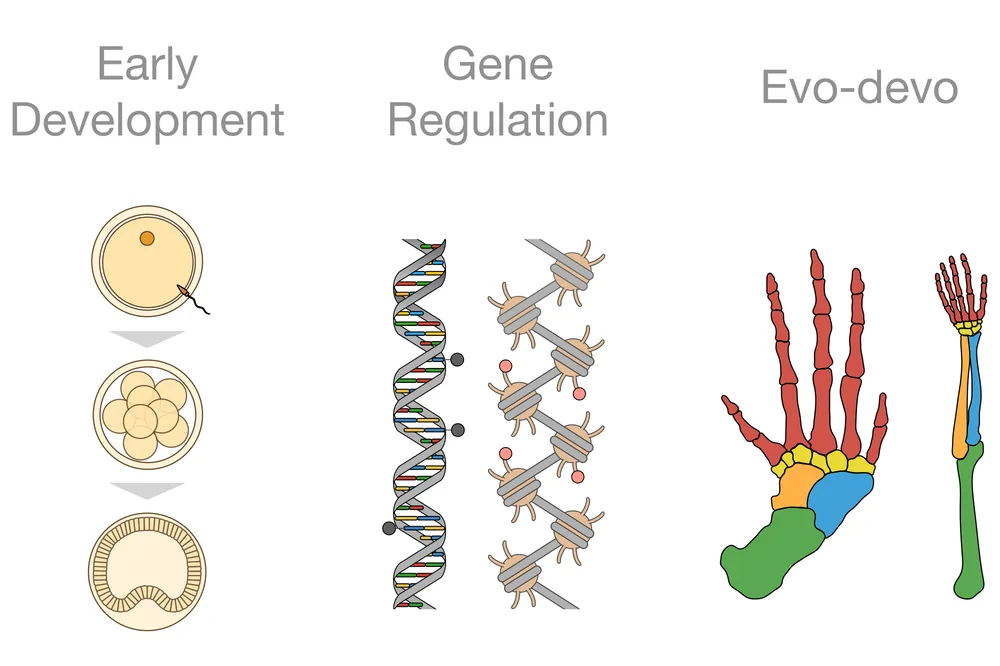
In the following sections, we will trace this remarkable journey from beginning to end. We start with fertilization and follow the embryo as it divides, folds, and patterns itself into a body. We will see how genes are regulated to create different cell types, how tissues are sculpted by signals and forces, and how organisms grow, repair themselves, and age. Finally, we will ask how changes in development drive the evolution of new body forms.