Cells: Units of Life
Just as atoms are the units of chemistry, cells are the basic units of life. A single cell can harvest energy and matter, maintain internal order, sense and respond to signals, and reproduce. DNA and proteins are essential, but their roles become truly biological only inside a cell’s regulated environment, where membranes, enzymes, and energy flows organize thousands of reactions into a coherent, self-sustaining system.
The Cell Theory
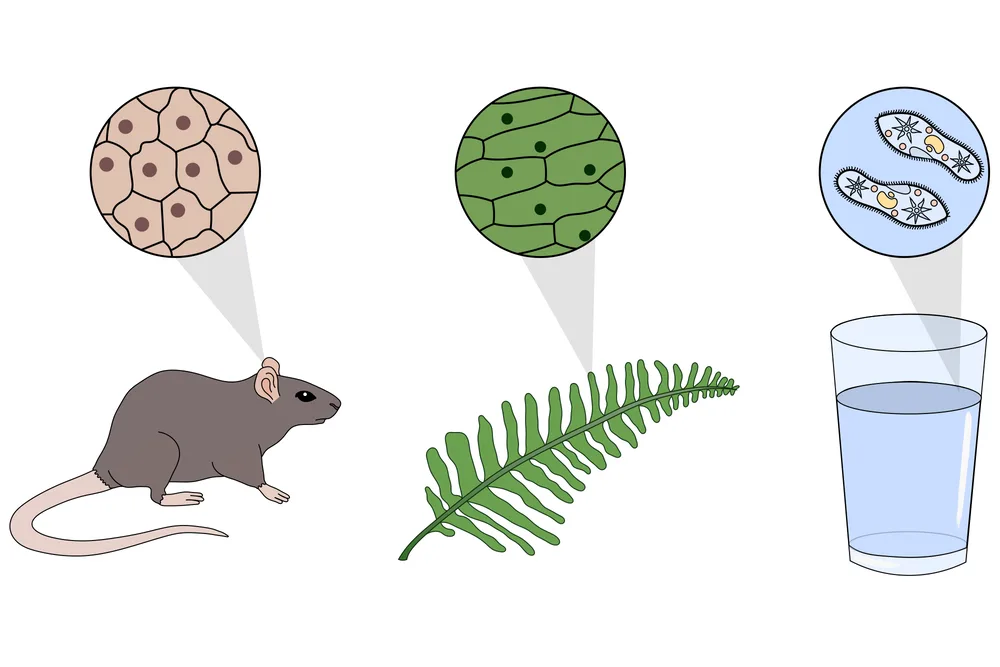
Cell theory states: (1) Cells are life’s fundamental units. (2) All organisms are made of one or more cells. (3) All cells arise from pre-existing cells. These principles unify bacteria, archaea, plants, fungi, and animals. They explain growth, heredity, and development and provide a framework for understanding disease, where disruptions of normal cellular processes lead to altered tissue and organ function.
Three implications follow. Studying cells is studying life itself, because cellular processes underlie physiology and behavior. Life is continuous: every cell descends from earlier cells through unbroken lineages. And Earth’s living history began when the first cells formed — compartments where information molecules and metabolism could coevolve and become robust enough to persist across generations.
Continuity of Life
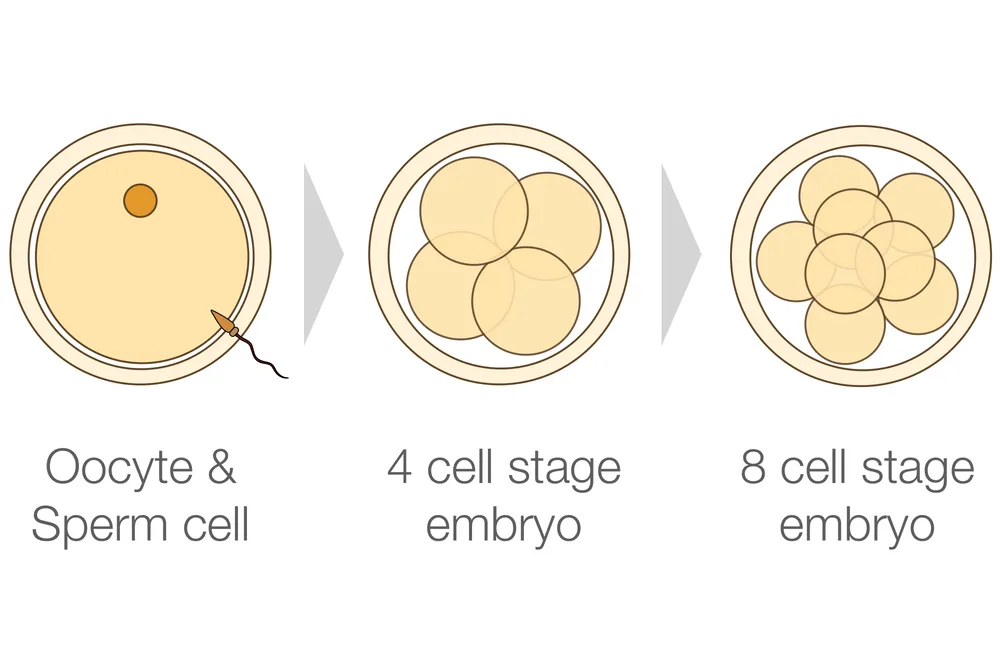
All cells in your body trace back to a single fertilized egg formed when a sperm fused with an oocyte. Through countless rounds of division and differentiation, that one cell gave rise to the tissues and organs of a complex organism. This lineage extends backward through your ancestors and ultimately to the earliest cells, linking personal development with deep evolutionary time.
Molecular Diversity
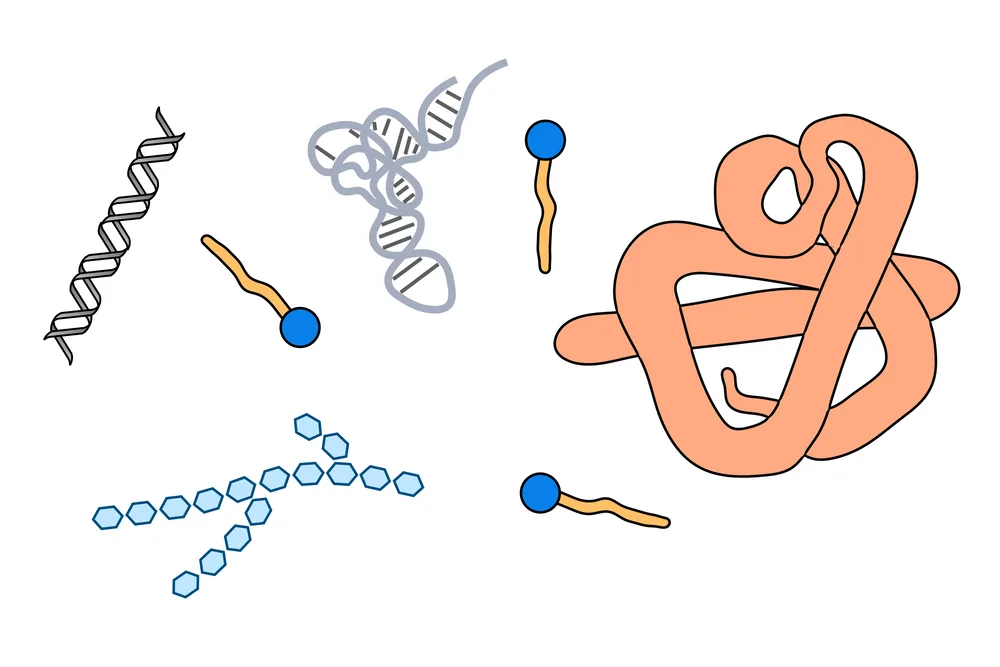
Cells contain water plus tens of thousands of molecule types — ions, metabolites, lipids, carbohydrates, proteins, and nucleic acids — usually in many copies. Spatial organization and compartmentalization ensure that reactions occur at the right rates and locations. Together these molecules power metabolism, transmit information, adapt to environmental changes, and replicate the cell’s structures and genome.
Before Cells: Protobionts
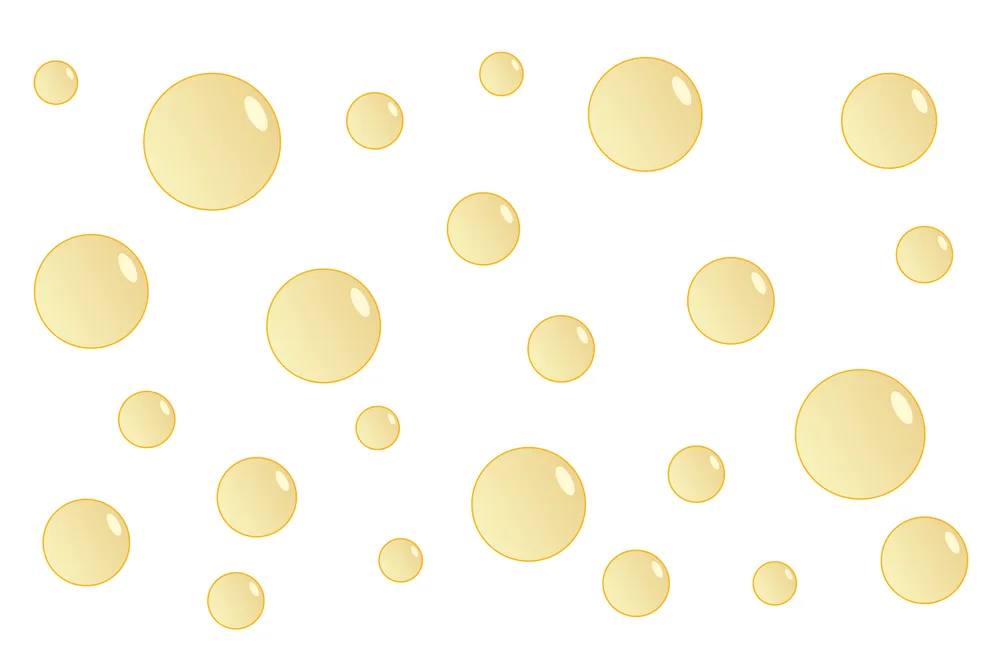
The evolutionary origin of cells is a long lasting question. Prebiotic simulations show macromolecules forming droplets that keep an interior distinct from the outside. These microspheres are not alive, yet they concentrate reactants, slow diffusion, and sustain simple reaction networks. Such behavior suggests how early chemistry might have gained compartmentalization — an essential step toward stable, self-maintaining systems capable of evolution.
The biochemist Alexander Oparin mixed polymers and observed coacervate droplets with enriched interiors. Inside, some reactions proceeded faster, while selective exchange occurred across the boundary. Although not living, coacervates hinted at primitive control over chemistry and gradients, illustrating how spontaneous self-assembly could create proto-compartments that nurture complexity.
Spontaneous Vesicles
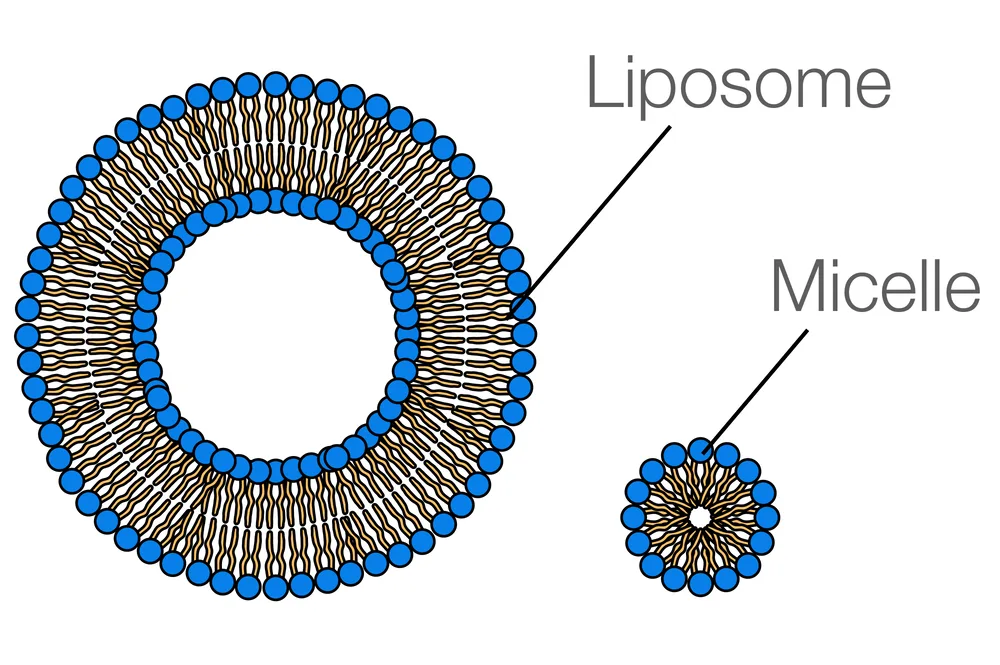
A simple fact of nature is that lipids self-assemble into bilayer vesicles in water, creating tiny compartments with semi-permeable membranes. In the context of chemical evolution and an RNA world, such vesicles could host catalytic RNAs and metabolic cycles, protecting them from dilution and enabling selection for more efficient replication and resource use, which are steps on the path to the first cells.
How Big Are Cells?
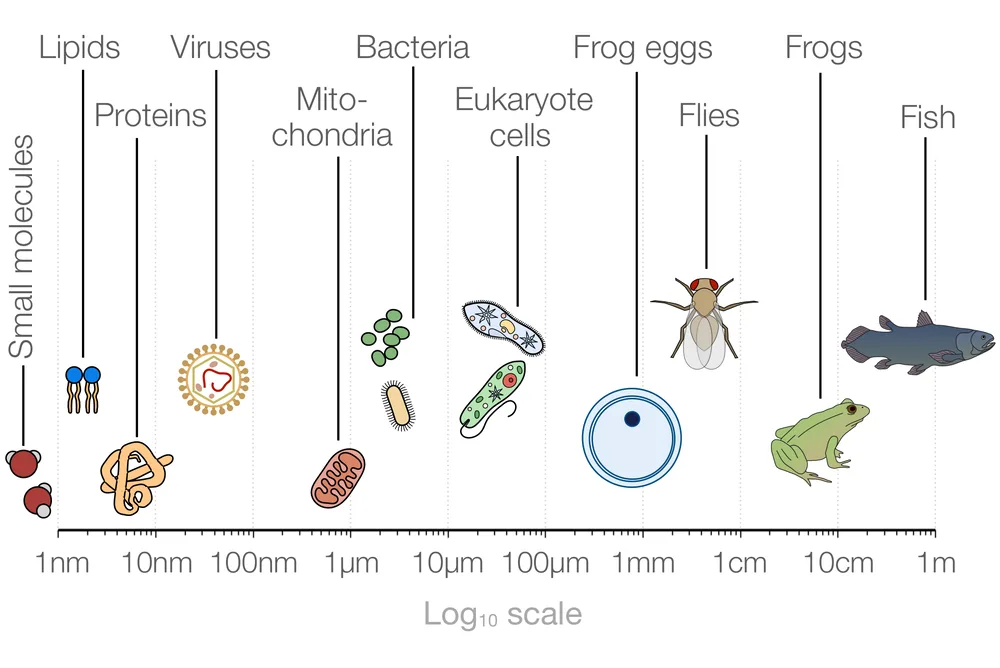
Most bacteria measure ~1–5 µm, while typical animal and plant cells are ~10–100 µm. Some eggs reach millimeters and are visible to the naked eye. Neurons can extend meters via thin axons while their cell bodies remain small. Cell size reflects trade-offs among diffusion, energy supply, mechanical strength, and the need to coordinate reactions over space.
As cells grow, volume increases faster than surface area. Surface limits nutrient and waste exchange, while volume sets total metabolic demand. This mismatch constrains cell size and favors shapes or surface features — like microvilli — that increase area. Many organelles and cytoskeletal networks also help keep diffusion distances short inside larger cells.
Multicellularity eases the constraint: many small cells create vast internal surfaces. Circulatory and transport systems deliver oxygen and nutrients deep into tissues and remove wastes efficiently. Folding, branching, and thin epithelia maximize exchange, enabling complex organs to function while preserving short diffusion paths at the cellular scale.
There are, however, some special cases. Bird and reptile eggs are large because they store nutrients for early development. Some algae and even some rare bacteria are macroscopic. Neurons solve long-distance signaling with slender axons, placing metabolic hubs near the soma. These cases illustrate how geometry, resource storage, and transport strategies shape the limits and possibilities of cell size.
Most cells are below the eye’s resolution of ~0.2 mm, so microscopes became essential tools. Light microscopes, using glass lenses, reach ~0.2 µm resolution and reveal cell size, shape, division, and organelles, often aided by stains or fluorescence. Electron microscopes go much further, resolving membranes and macromolecular assemblies at nanometer scale. Together, these technologies connect our knowledge of cell size with the visualization of subcellular structures.
The Plasma Membrane
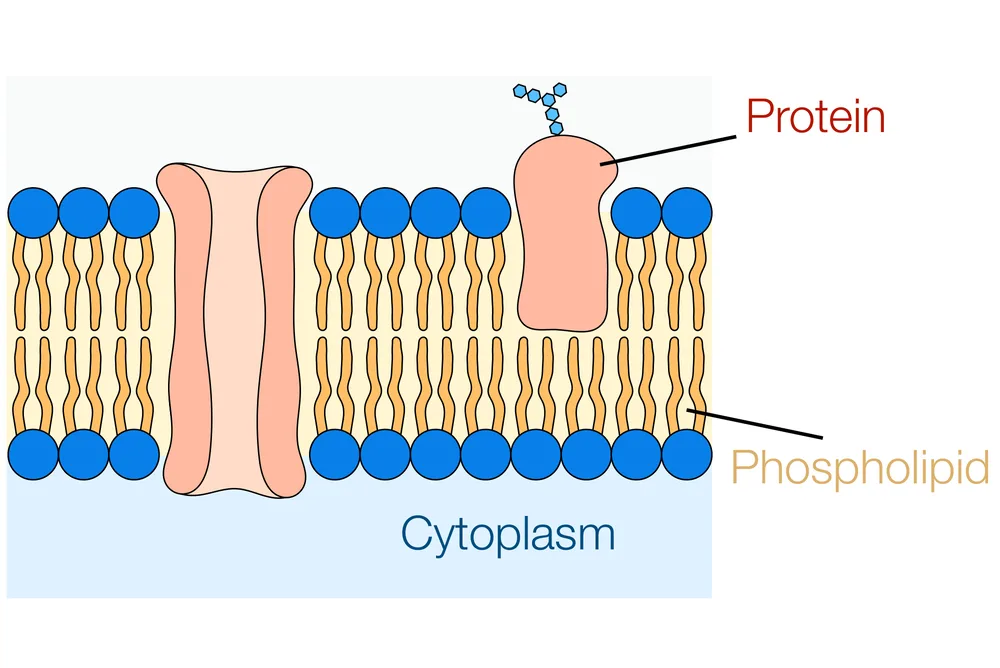
Every cell is bounded by a plasma membrane: a phospholipid bilayer with embedded proteins and carbohydrates. It separates cytoplasm from the environment, maintains ionic and chemical gradients, and organizes enzymes and signaling complexes. Crucially, membrane fluidity and composition tune permeability, curvature, and the formation of specialized microdomains.
Selective permeability allows some molecules to cross freely, while others require channels, carriers, or pumps. The membrane supports homeostasis, receives external cues through receptors, and mediates adhesion to neighboring cells and the extracellular matrix. These functions underlie tissue integrity, coordinated responses, and multicellular organization.
Two Cellular Blueprints
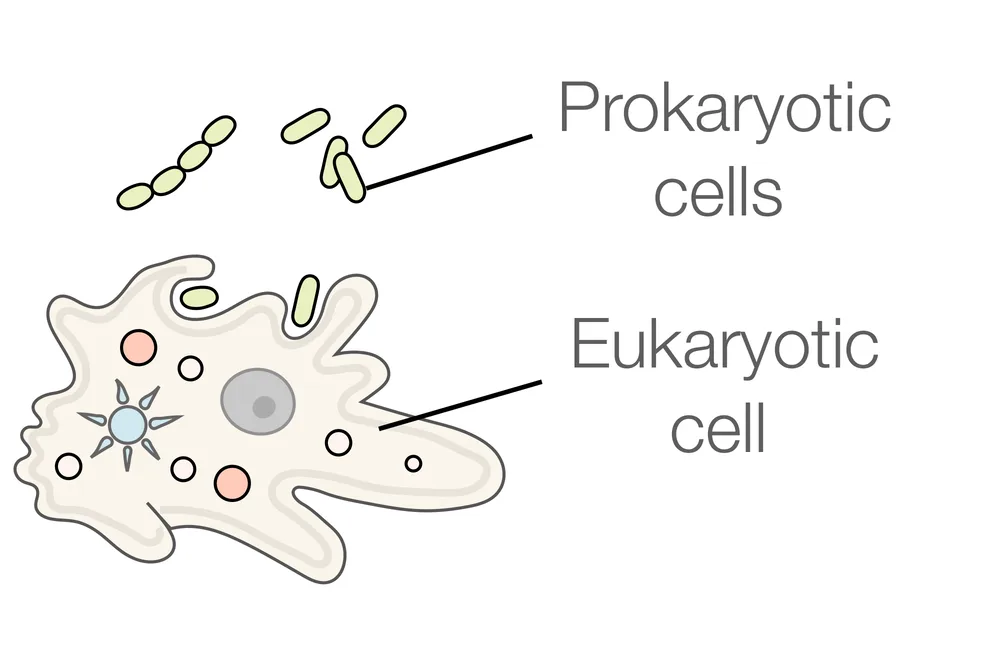
Cells follow two broad designs. Prokaryotes (Bacteria and Archaea) lack a nucleus and membrane-bound organelles, and their DNA resides in a nucleoid. Eukaryotes (protists, plants, fungi, animals) on the other hand possess a membrane-bound nucleus and diverse organelles. Next, we compare their structures, strategies, and evolutionary origins in more detail.