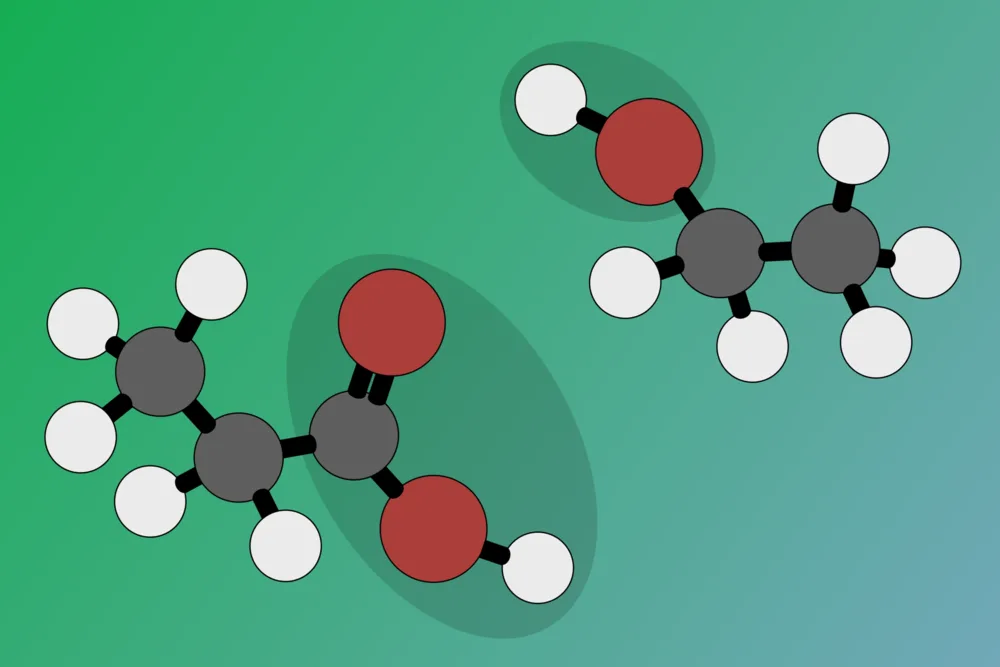
Often some distinct parts of a molecule play an outstanding role in its characteristic reactivity. These reactive parts, called functional groups, have distinctive chemical properties regardless of the rest of the molecule that they are attached to. Hence, the same functional group will react similarly as part of different compounds.
Here, we will briefly discuss some of the most relevant functional groups in biology.
Hydrocarbyls
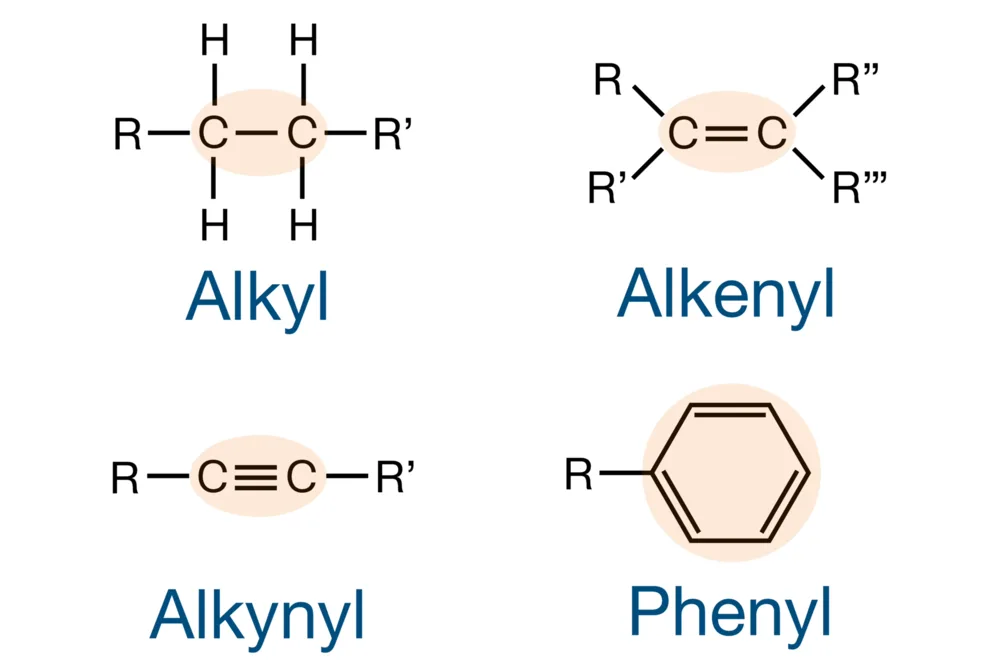
Hydrocarbyls are groups that contain only hydrogen and carbon atoms in various compositions and structures, of which different types are depicted here. The carbon atoms of alkyls are connected by single bonds, while alkenyls have double bonds and alkynyls contain triple bonds. Phenyl groups are benzene derivates with their typical aromatic ring structures - planar rings of six carbon atoms with three double bonds. As per convention, the letter R represents another part of a compound.
Simple oxygen groups
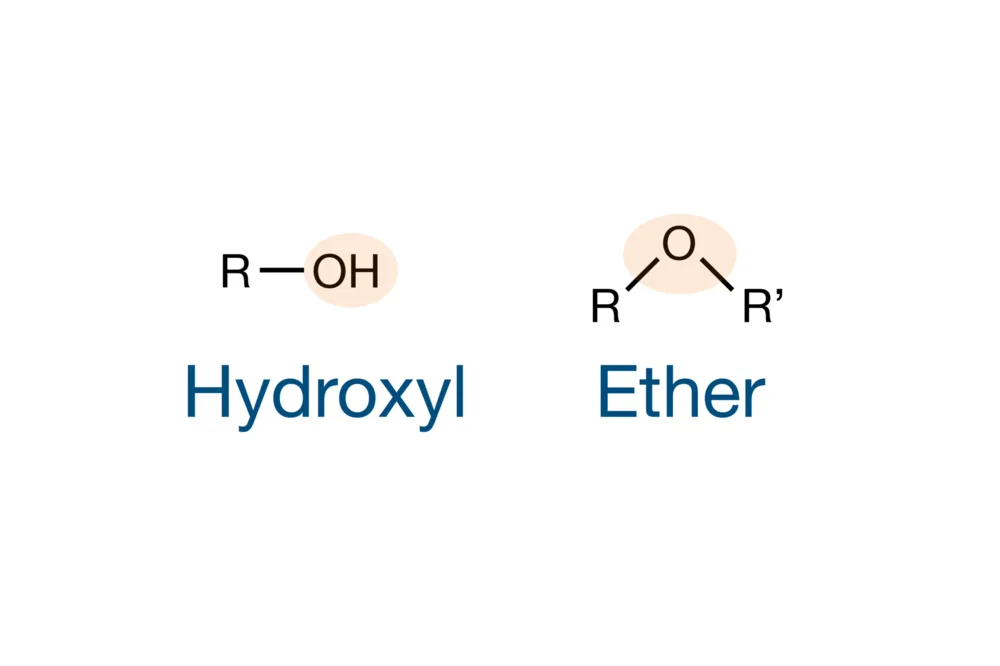
Oxygen is an important part of many types of functional groups. Simple oxygen groups however only contain a single bonded oxygen. These include, most importantly hydroxyl groups, which classify alcohols, as well as ethers which contain an oxygen atom that is flanked by carbon-containing parts, which are symbolized as R and R'.
Carbonyl groups
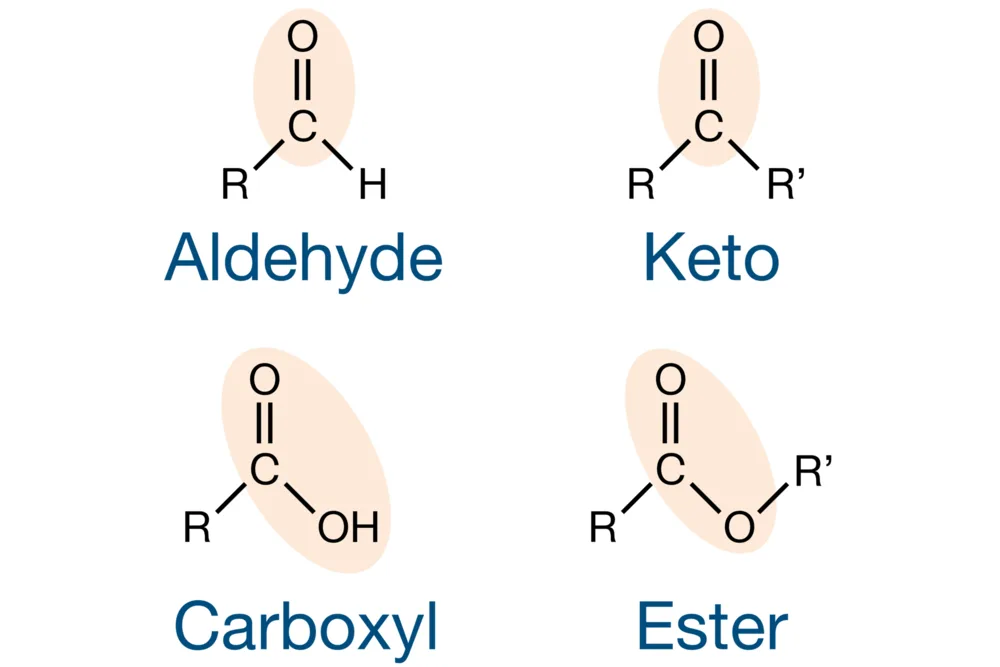
Carbonyl groups are more complex oxygen-containing groups that additionally directly include carbon. The groups that are shown here contain a double bond between oxygen and carbon. Carboxyl groups define the vast and important class of carboxylic acids, which we will encounter multiple times from here onwards. Very often carboxyl groups are depicted in the shortened form of "COOH".
Nitrogen groups
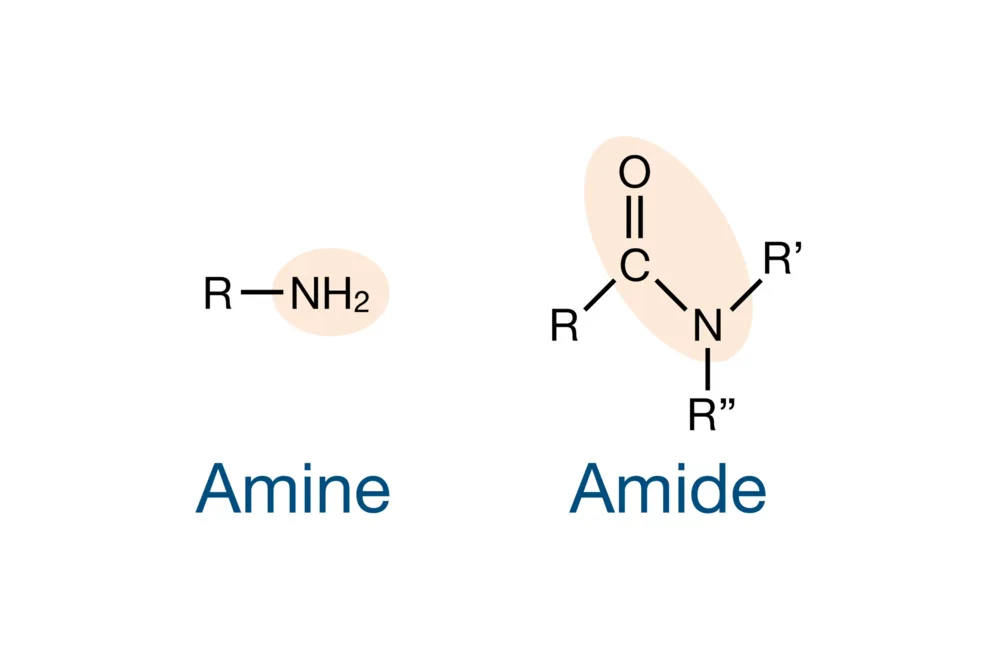
Nitrogen-containing groups either consist only of nitrogen and potentially hydrogen, such as in amines, or additionally contain carbon and/or oxygen, such as in amides. While many more biologically relevant variants exist, we only focus on these most common groups here. Amino groups are of particular interest since they are, together with carboxyl groups, part of amino acids.
Phosphorus groups
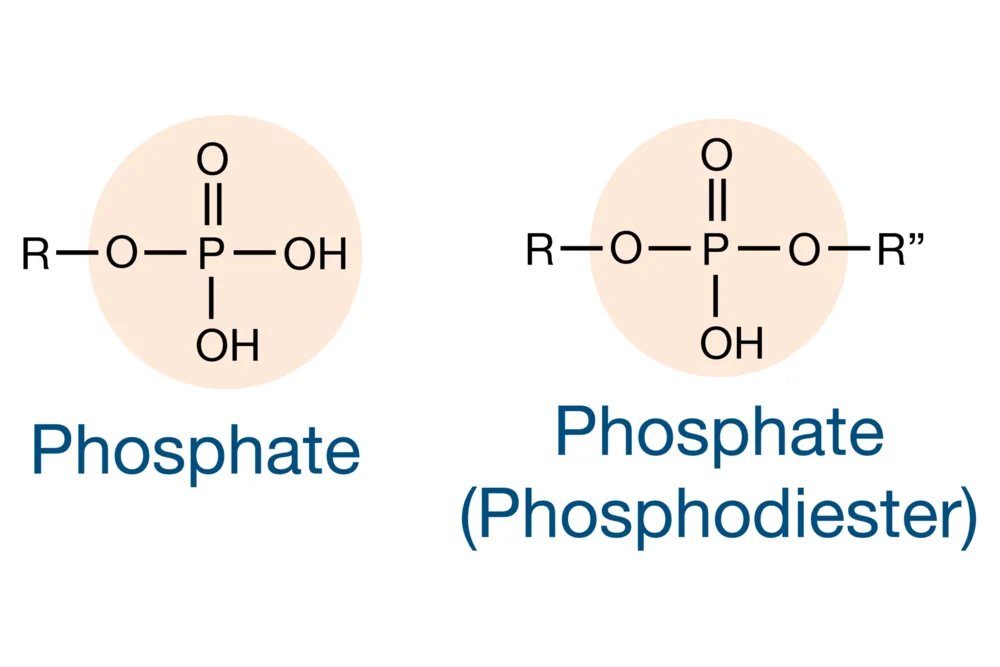
The most important phosphorus-containing group in biology is the phosphate group, which can be part of a phosphodiester bond. You will encounter phosphate groups most prominently in nucleic acids, but also as a modification in other biologically important compounds. They are also an integral part of phospholipids, which make up cell membranes. Finally, phosphate groups are very important in energy transfer, especially via adenosine triphosphate (ATP).
Sulfur groups
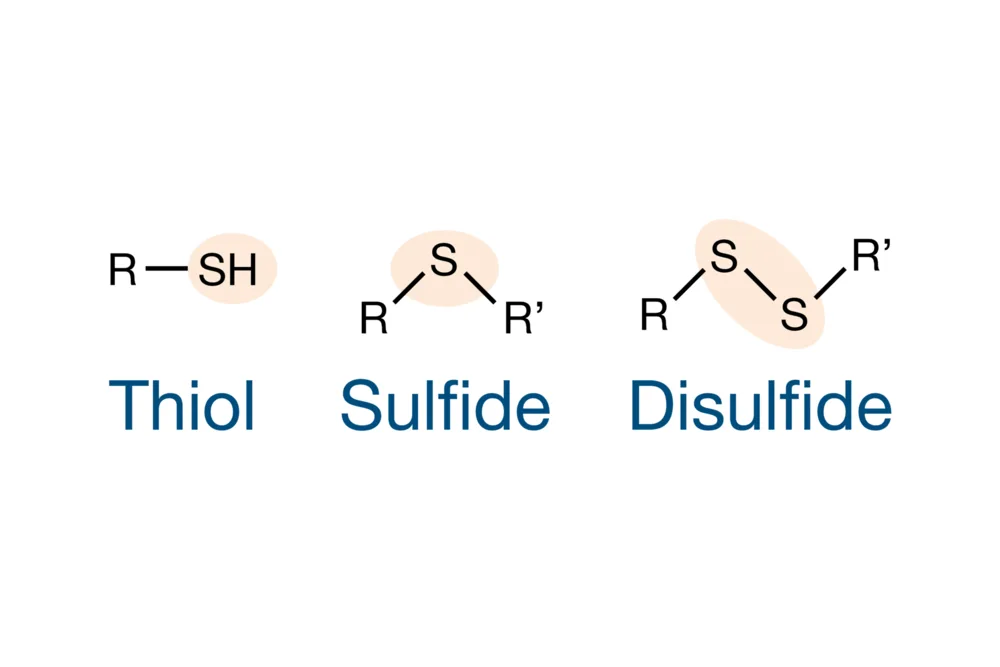
Important sulfur-containing groups include thiol groups, sulfides and disulfides, which can be formed through bonding of two thiol groups. The latter are important for protein structures, about which we will learn more in later sections.
The following section, however, deals with one of the most crucial molecules in biology - a small and simple molecule that is a decisive prerequisite for life itself.