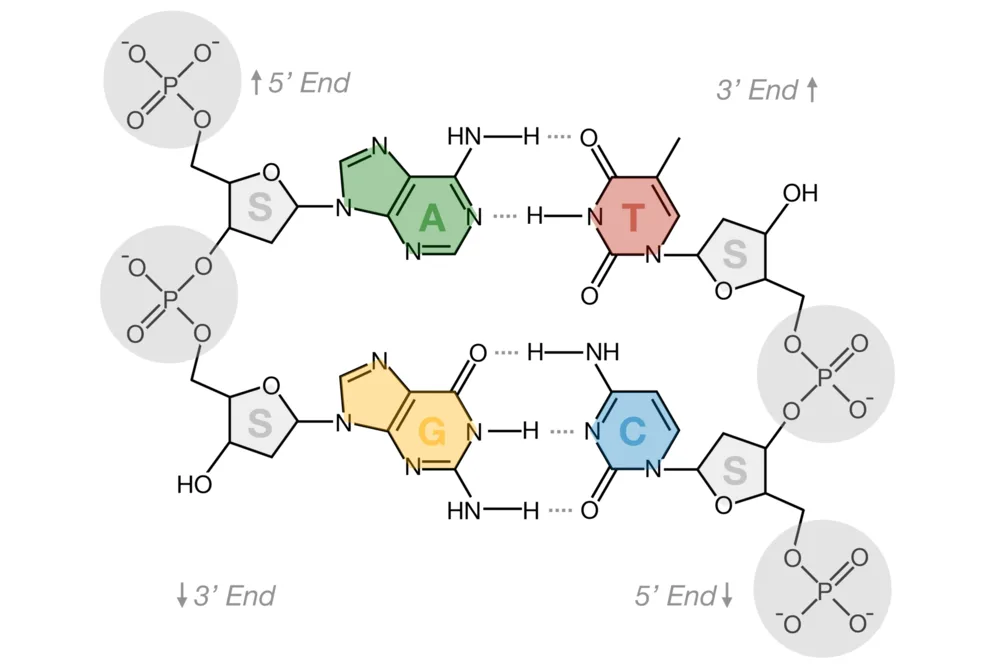
A pairs with T (or U), G pairs with C
Holds the two DNA strands together
Complementary base pairing is the specific pairing of nucleobases through hydrogen bonds. Adenine pairs with thymine in DNA, or with uracil in RNA, through two hydrogen bonds, and guanine pairs with cytosine through three. Each pair joins a two-ring purine to a one-ring pyrimidine, so the DNA double helix keeps an even width. Because one strand determines the sequence of the other, base pairing allows DNA to be copied during replication and read during transcription.