Chain: nonpolar
Codons: GCA GCC GCG GCT
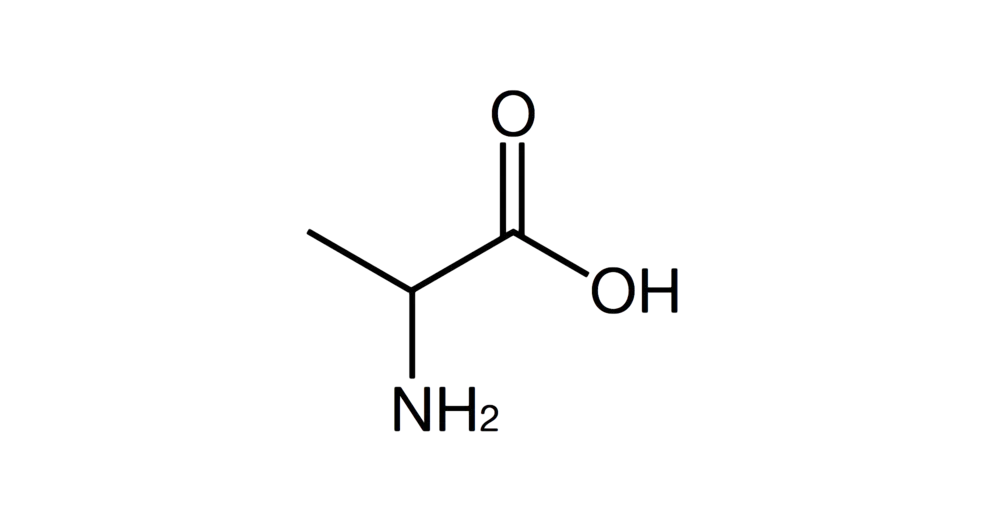
Alanine (codons: GCA, GCC, GCG, GCT) is an α-amino acid that is used in the biosynthesis of proteins, specifically its L-isomer (left-handed). It contains an α-amino group, an α-carboxylic acid group, and an aliphatic methyl group side chain, making it a nonpolar amino acid. At physiological pH (7.4), the amino group is in the protonated form (−NH₃⁺) and the carboxyl group is in the deprotonated form (−COO−).
Alanine is one of the 20 amino acids encoded in the standard genetic code and is non-essential in humans, as it can be metabollically synthesized. It is produced through transamination from pyruvate, which is the end product of glycolysis. Through reversal of this reaction, alanine can be used for synthesis of glycose or for energy generation through the citric acid cycle. Alanine, as well as other amino acids such as leucine and glutamic acid, frequently occur in α-helices of proteins, as these amino acids facilitate the formation of such secondary structures.
In 1850, Adolph Strecker discovered and first synthesized alanine when he combined acetaldehyde and ammonia with hydrogen cyanide. It was hence named in reference to aldehyde. It was later isolated for the first time from organic materal, namely from silk, in 1875 by Paul Schützenberger.
Properties
Side chain: hydrophobic (nonpolar, uncharged)
Chemical formula: C₃H₇NO₂
Molar mass: 89.09 g/mol
Density: 1.42 g/cm³