Chain: special case
Codons: TGC TGT
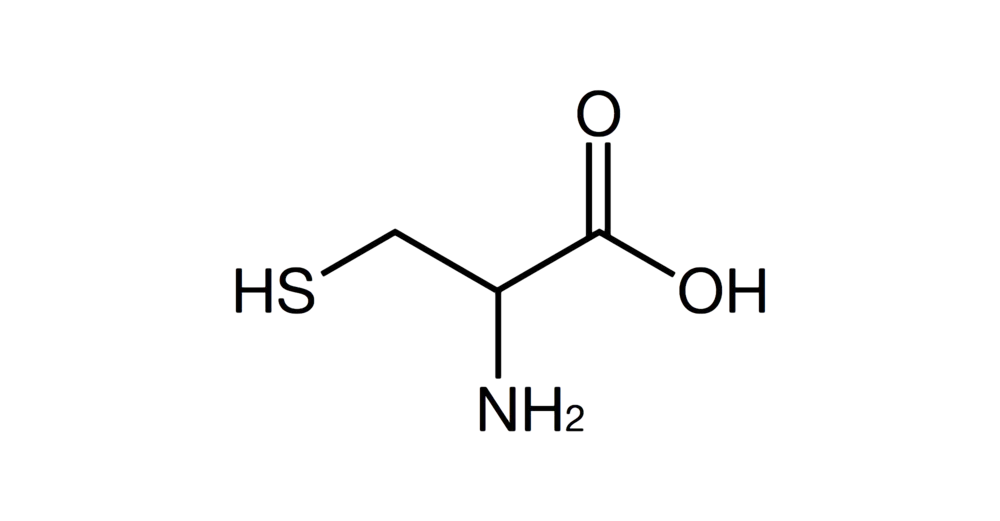
Cysteine (codons: TGC, TGT) is an α-amino acid that is used in the biosynthesis of proteins, specifically its L-isomer (left-handed). It contains an α-amino group, an α-carboxylic acid group, and an aliphatic sulfur-containing thiol side chain. At physiological pH (7.4), the amino group is in the protonated form (−NH₃⁺) and the carboxyl group is in the deprotonated form (−COO−).
Cysteine is one of the 20 amino acids encoded in the standard genetic code and is non-essential in humans if a sufficient quantity of the essential amino acid methionine is available, from which it derives its sulfur atom. The synthesis of cysteine starts with the amino acid serine, which is very similar to cysteine, having a hydroxyl group instead of a thiol group at the side chain. The thiol side chain of cysteine often participates in enzymatic reactions, as a nucleophile. Moreover, the thiol groups of two cysteins that come into contact within a polypeptide can form covalent disulfide bonds (–S–S–), which serve an important structural role in many proteins.
In 1810, William Wollaston first isolated cystein from kidney stones as cystin, which is the oxidized dimer form, connected by a disulfide bond. It was named in reference to the Greek word for bladder ("cystos") by Jöns Jakob. Later, Emil Fischer determined the structure of cysteine.
Properties
Side chain: special case
Chemical formula: C₃H₇NO₂S
Molar mass: 121.15 g/mol
Density: 1.30 g/cm³