Chain: charged (-)
Codons: GAA GAG
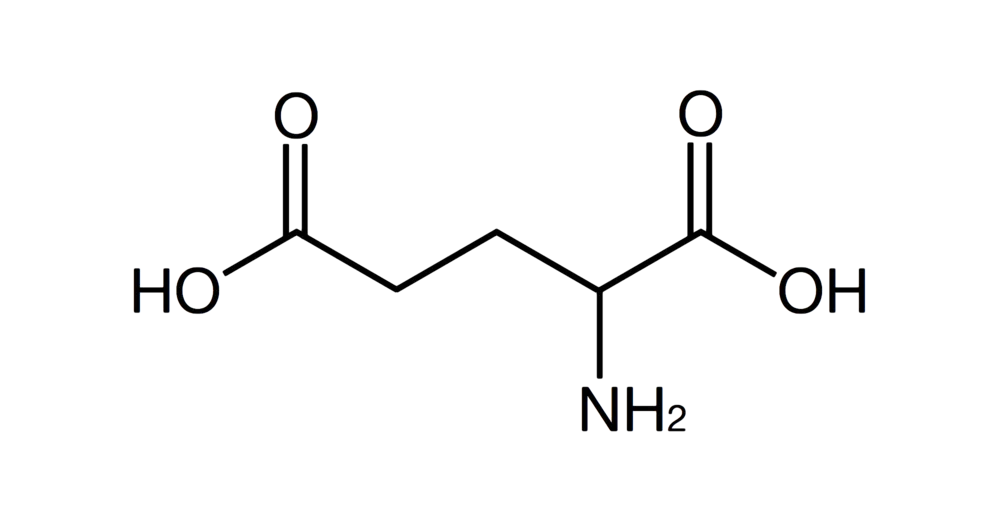
Glutamic Acid (codons: GAA, GAG) is an α-amino acid that is used in the biosynthesis of proteins, specifically its L-isomer (left-handed). It contains an α-amino group, an α-carboxylic acid group, and an aliphatic carboxyl group side chain. At physiological pH (7.4), the amino group is in the protonated form (−NH₃⁺) and the carboxyl group is in the deprotonated form (−COO−). Similarly, the acidic side chain usually occurs in proteins as the glutamate form (−COO−), making glutamic acid a negatively charged amino acid.
Glutamic acid is one of the 20 amino acids encoded in the standard genetic code and is non-essential in humans, as it can be metabollically synthesized. It is generated from α-ketoglutaric acid, a metabolic intermediate in many processes, such as the citric acid cycle or nitrogen metabolism. Glutamic acid, or glutamate in its anion form, is an important excitatory neurotransmitter in the vertebrate nervous system. Additionally, glutamate itself serves as metabolic precursor for the neurotransmitter GABA (γ-aminobutyric acid). It is also responsible for the savory flavor (umami) of certain foods, and used in glutamate flavorings.
In 1866, glutamic acid was isolated for the first time by Heinrich Ritthausen through sulfuric acid treatment of wheat gluten, after which it was named. Its chemical formula was determined by Gustav Werther and its structure was solved in 1872 by Wilhelm Dittmar.
Properties
Side chain: hydrophilic (negatively charged)
Chemical formula: C₅H₉NO₄
Molar mass: 147.13 g/mol
Density: 1.46 g/cm³