Chain: polar
Codons: CAA CAG
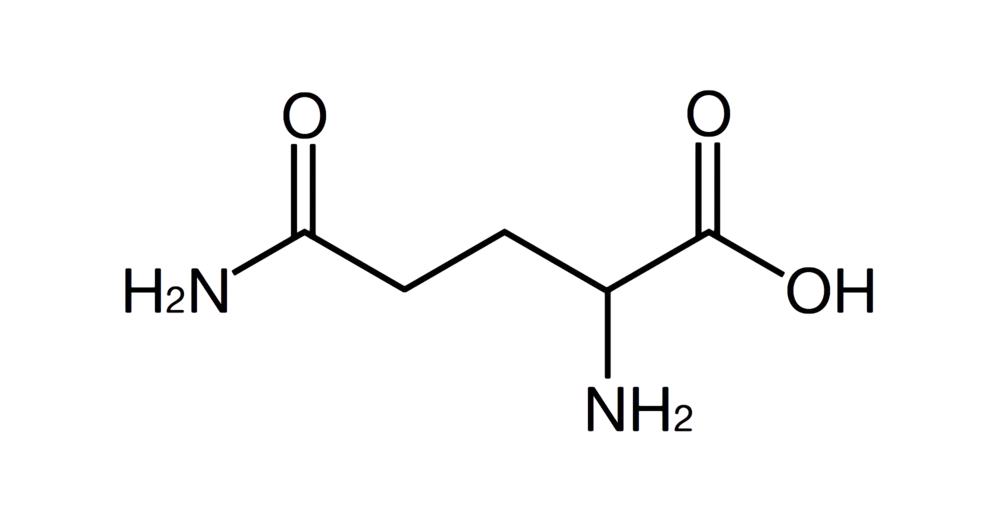
Glutamine (codons: CAA, CAG) is an α-amino acid that is used in the biosynthesis of proteins, specifically its L-isomer (left-handed). It contains an α-amino group, an α-carboxylic acid group, and an aliphatic carboxamide group side chain, making it a polar amino acid. At physiological pH (7.4), the amino group is in the protonated form (−NH₃⁺) and the carboxyl group is in the deprotonated form (−COO−).
Glutamine is one of the 20 amino acids encoded in the standard genetic code and is non-essential and conditionally essential in humans, meaning the body can usually synthesize sufficient amounts of it, but in cases of increased demand, glutamine must be obtained from the diet. Glutamine is synthesized from glutamate and ammonia, consuming ATP. In turn, it can be transformed into succinate, which is involved in many biochemical reactions and biological processes. Glutamine itself plays a variety of roles, acting as a source for ammonium, being the precursor to the neurotransmitter Glutamate and providing cellular energy next to glucose.
In 1877, Ernst Schulze isolated glutamine for the first time, realizing that in fodder beets Glutamic Acid occurs in its amide form. He named it therefore in analogy to Asparagine and Aspartic Acid. The structure of Glutamic Acid and therefore glutamine was already solved in 1872 by Wilhelm Dittmar.
Properties
Side chain: hydrophilic (polar, uncharged)
Chemical formula: C₅H₁₀N₂O₃
Molar mass: 146.15 g/mol
Density: 1.47 g/cm³