Chain: special case
Codons: GGA GGC GGG GGT
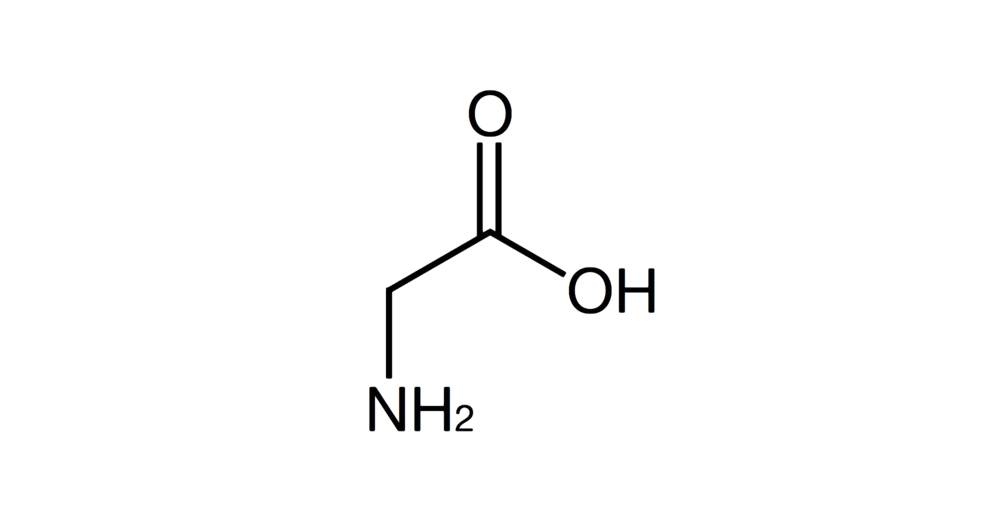
Glycine (codons: GGA, GGC, GGG, GGT) is an α-amino acid that is used in the biosynthesis of proteins, specifically its L-isomer (left-handed). It contains an α-amino group, an α-carboxylic acid group, and a single hydrogen atom as its side chain. At physiological pH (7.4), the amino group is in the protonated form (−NH₃⁺) and the carboxyl group is in the deprotonated form (−COO−).
Glycine is one of the 20 amino acids encoded in the standard genetic code and is non-essential in humans, as it can be metabollically synthesized. It is generated from the amino acid serine, which is in turn derived from 3-phosphoglycerate. In another pathway, glycine is synthesized in a reaction involving 5,10-methylenetetrahydrofolate, ammonia, carbon dioxide and NADH. Glycine is integral to the formation of alpha helices in secondary protein structure due to its compact form. For the same reason, it is the most abundant amino acid in collagen triple-helices. Glycine is also an inhibitory neurotransmitter.
In 1820, Henri Braconnot discovered glycine when he hydrolyzed gelatine by boiling it with sulfuric acid. Initially it was named "sugar of gelatine", due to its sweet taste and crystalline structure, but later was named glycine after the Greek word for sweet ("glycos") by Jöns Jakob Berzelius. The chemical structure was resolved in 1858 by Auguste André Thomas Cahours.
Properties
Side chain: special case
Chemical formula: C₂H₅NO
Molar mass: 75.07 g/mol
Density: 1.16 g/cm³