Chain: charged (+)
Codons: CAC CAT
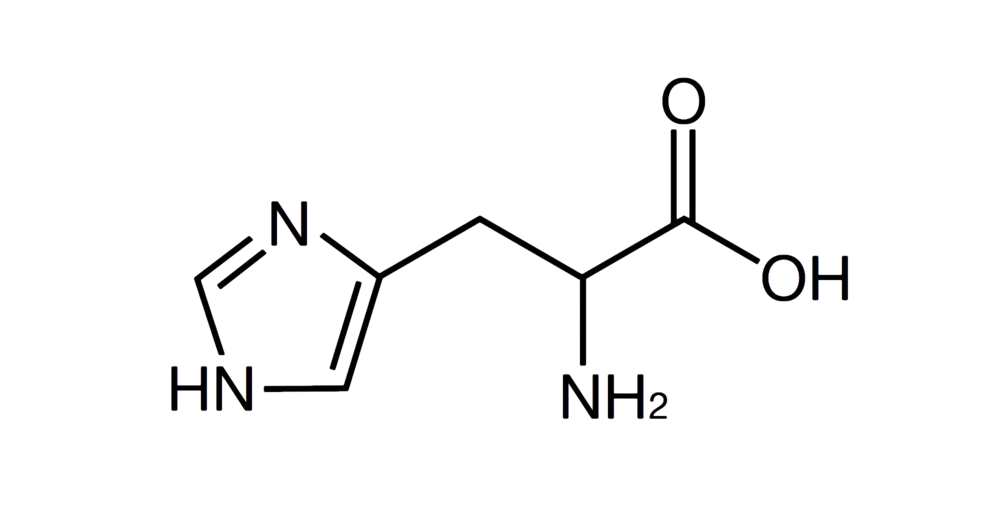
Histidine (codons: CAC, CAT) is an α-amino acid that is used in the biosynthesis of proteins, specifically its L-isomer (left-handed). It contains an α-amino group, an α-carboxylic acid group, and an aromatic basic imidazole side chain. At physiological pH (7.4), the amino group is in the protonated form (−NH₃⁺) and the carboxyl group is in the deprotonated form (−COO−). Similarly, the imidazole side chain is partially protonated, making it a positively charged amino acid.
Histidine is one of the 20 amino acids encoded in the standard genetic code and is essential in humans, meaning that it must be obtained from the diet. It can be transformed to glutamate and also to histamine, a crucial inflammatory agent in immune responses. At physiological conditions histidine can act both as a proton donor and acceptor. For this reason, it is often found in a catalytic triad at the active site of enzymes, such as in the motif serine-histidine-aspartate. Moreover, the imidazole sidechain of histidine commonly serves as a ligand in metalloproteins, for example by being attached to Iron in myoglobin and hemoglobin.
In 1896, histidine was first isolated simultaneously by Albrecht Kossel and Sven Gustaf Hedin. Kossel obtained it by precipitation with mercuric chloride from the alkaline solution containing the products of hydrolysis of the protamine sturine. Its name is derived from the Greek word for tissue ("histion"), due to its occurrence in plant tissue.
Properties
Side chain: hydrophilic (positively charged)
Chemical formula: C₆H₉N₃O₂
Molar mass: 155.16 g/mol
Density: 1.40 g/cm³