Chain: nonpolar
Codons: CTA CTC CTG CTT TTA TTG
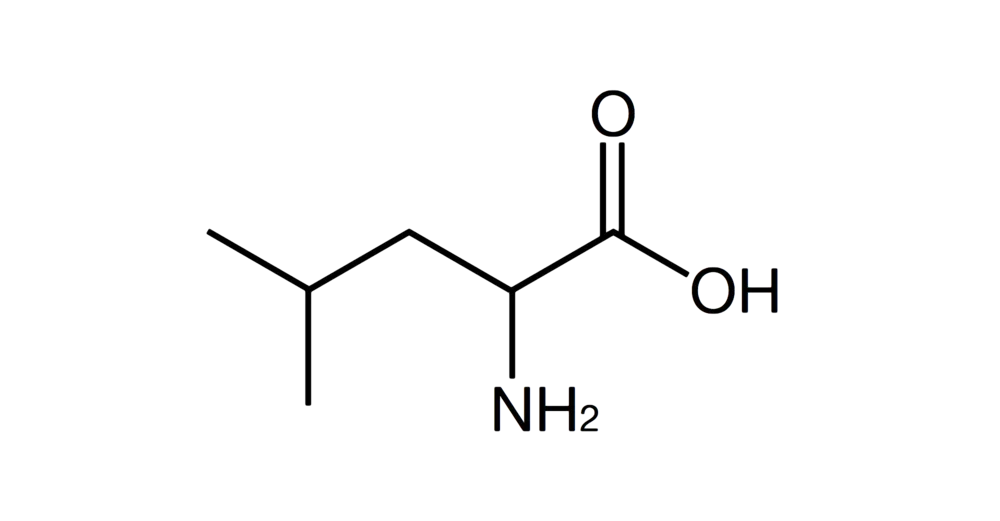
Leucine (codons: CTA, CTC, CTG, CTT, TTA, TTG) is an α-amino acid that is used in the biosynthesis of proteins, specifically its L-isomer (left-handed). It contains an α-amino group, an α-carboxylic acid group, and an aliphatic branched hydrocarbon side chain, making it a nonpolar amino acid. At physiological pH (7.4), the amino group is in the protonated form (−NH₃⁺) and the carboxyl group is in the deprotonated form (−COO−).
Leucine is one of the 20 amino acids encoded in the standard genetic code and is essential in humans, meaning that it cannot be metabollically synthesized, and must be obtained from the diet. In other organisms, such as plants and microorganisms, it is synthesized from pyruvate. In humans, it is metabolized into acetoacetate and acetyl-CoA and used as a ketogenic energy source, especially during fasting.
In 1820, Henri Braconnot isolated leucine through acidic hydrolysis from muscle tissue and wool and named it, due to its white color, in reference to the Greek word for white ("leukos"). Only in 1881, Ernst Schulze solved its structure.
Properties
Side chain: hydrophobic (nonpolar, uncharged)
Chemical formula: C₆H₁₃NO₂
Molar mass: 131.17 g/mol
Density: 1.29 g/cm³