Chain: nonpolar
Codons: ATG (start codon)
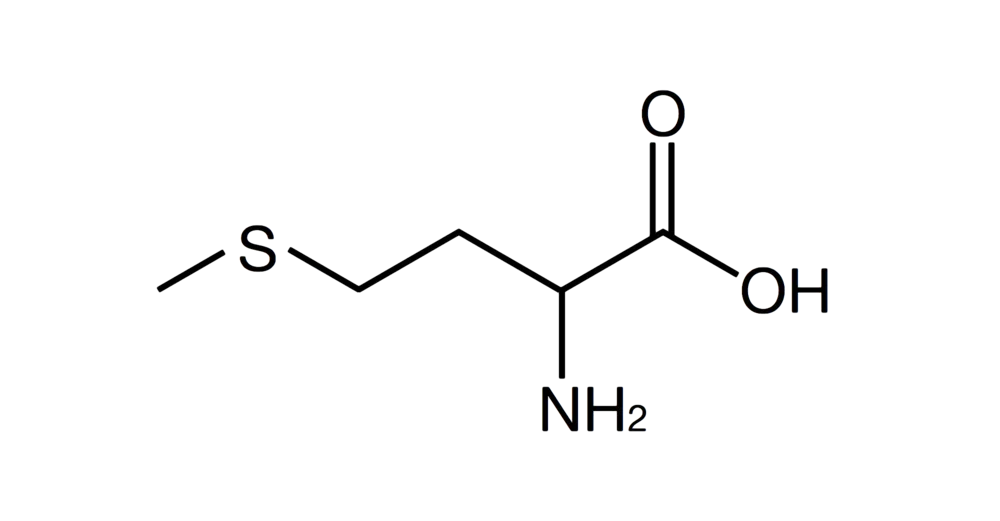
Methionine (codon: ATG) is an α-amino acid that is used in the biosynthesis of proteins, specifically its L-isomer (left-handed). It contains an α-amino group, an α-carboxylic acid group, and an aliphatic thioether side chain, making it a nonpolar amino acid. At physiological pH (7.4), the amino group is in the protonated form (−NH₃⁺) and the carboxyl group is in the deprotonated form (−COO−).
Methionine is one of the 20 amino acids encoded in the standard genetic code and is essential in humans, meaning that it cannot be metabollically synthesized, and must be obtained from the diet. In other organisms, such as plants and microorganisms, it is synthesized e. g. from aspartate. Methionine is coded for by the start codon ATG (AUG in RNA), which indicates the beginning of the coding region. It is therefore the first amino acid that produced in a nascent polypeptide during mRNA translation.
In 1922, methionine was first isolated by John Howard Mueller from the casein protein of milk. George Barger determined the chemical formula and the structure in 1926. Its name is an abbreviated form of the chemical term "γ-Methylthiol-α-amino-butyric acid".
Properties
Side chain: hydrophobic (nonpolar, uncharged)
Chemical formula: C₅H₁₁NO₂S
Molar mass: 149.21 g/mol
Density: 1.34 g/cm³