Chain: polar
Codons: TCA TCC TCG TCT AGC AGT
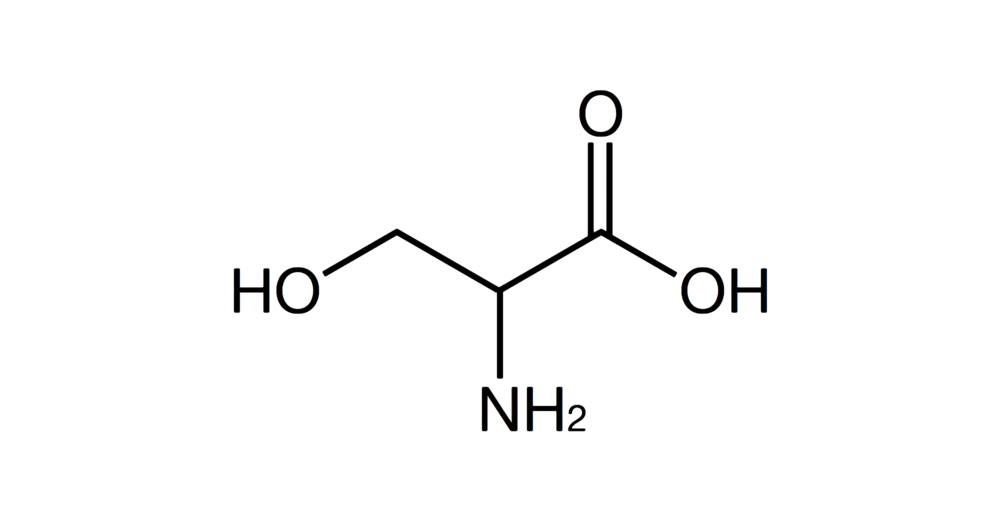
Serine (codons: TCA, TCC, TCG, TCT, AGC, AGT) is an α-amino acid that is used in the biosynthesis of proteins, specifically its L-isomer (left-handed). It contains an α-amino group, an α-carboxylic acid group, and an aliphatic hydroxymethyl group side chain, making it a polar amino acid. At physiological pH (7.4), the amino group is in the protonated form (−NH₃⁺) and the carboxyl group is in the deprotonated form (−COO−).
Serine is one of the 20 amino acids encoded in the standard genetic code and is non-essential in humans, as it can be metabollically synthesized. It can be generated from 3-phosphoglycerate, which is an intermediate from glycolysis. Serine can also be synthesized through a reversable reaction from glycine. It is hence also a precursor of glycine and other amino acids such as cysteine. Similar to other amino acids which side chain contains a hydrophilic hydroxyl group, serine can be phosphorylated, besides other posttranslational modifications, and therefore plays a role in activation and inactivation of enzymes. Moreover, it is often located at the active site of enzymes, as for example in the serine proteases.
In 1865, serine was first isolated from silk protein by Emil Cramer. Its name is derived from the Latin word for silk ("sericum").
Properties
Side chain: hydrophilic (polar, uncharged)
Chemical formula: C₃H₇NO₃
Molar mass: 105.09 g/mol
Density: 1.60 g/cm³