Chain: polar
Codons: ACA ACC ACG ACT
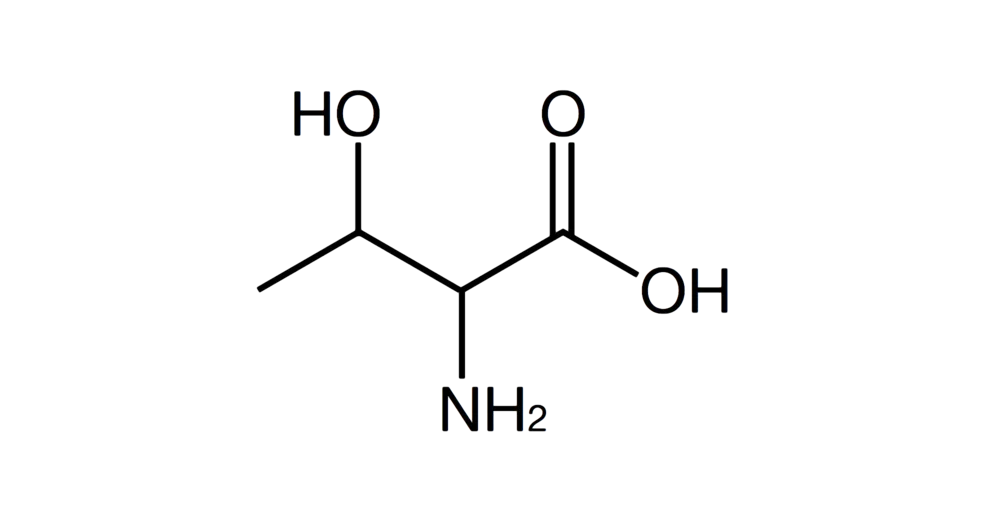
Threonine (codons: ACA, ACC, ACG, ACT) is an α-amino acid that is used in the biosynthesis of proteins, specifically its L-isomer (left-handed). It contains an α-amino group, an α-carboxylic acid group, and an aliphatic side chain containing a hydroxyl group, making it a polar amino acid. At physiological pH (7.4), the amino group is in the protonated form (−NH₃⁺) and the carboxyl group is in the deprotonated form (−COO−). It is structurally similar to serine and can be viewed as 3-methyl-serine.
Threonine is one of the 20 amino acids encoded in the standard genetic code and is essential in humans, meaning that it cannot be metabollically synthesized, and must be obtained from the diet. In plants and microorganisms, threonine is generated from aspartate. It can be metabolized to propionyl-CoA and is also a precursor of glycine. Similar to other amino acids which side chain contains a hydrophilic hydroxyl group, threonine can be phosphorylated, besides other posttranslational modifications, and therefore plays a role in activation and inactivation of enzymes. Threonine side chains frequently form hydrogen bonds in proteins, often with serine.
In 1936, threonine was first isolated and structurally described by William Cumming Rose in a systematic search, after he noticed that the 19 amino acids known to this point were not sufficient for animal feeding. It was therefore the last proteinogenic amino acid to be identified. It was named due to its structural similarity to threonic acid.
Properties
Side chain: hydrophilic (polar, uncharged)
Chemical formula: C₄H₉NO₃
Molar mass: 119.12 g/mol
Density: 1.45 g/cm³