Chain: nonpolar
Codons: GTA GTC GTG GTT
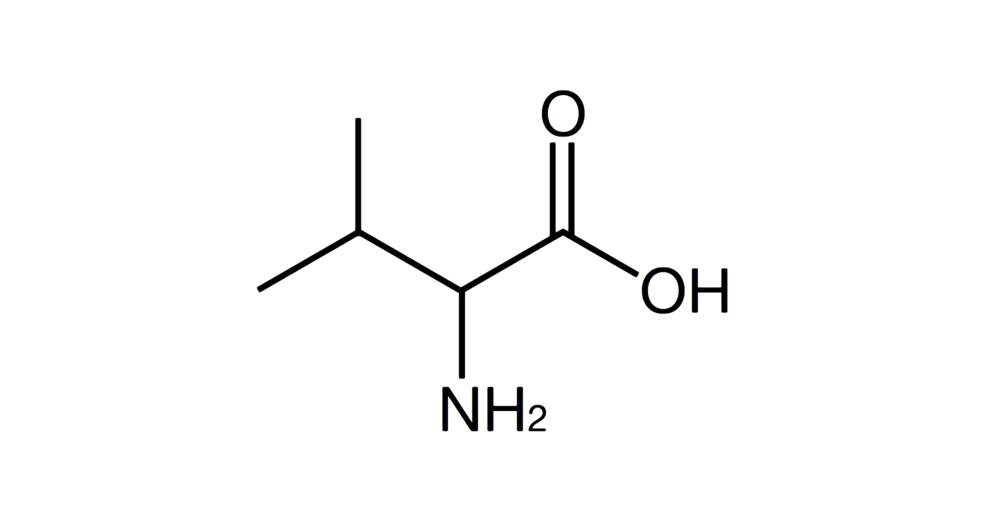
Valine (codons: GTA, GTC, GTG, GTT) is an α-amino acid that is used in the biosynthesis of proteins, specifically its L-isomer (left-handed). It contains an α-amino group, an α-carboxylic acid group, and an aliphatic branched hydrocarbon (isopropyl) side chain, making it a nonpolar amino acid. At physiological pH (7.4), the amino group is in the protonated form (−NH₃⁺) and the carboxyl group is in the deprotonated form (−COO−).
Valine is one of the 20 amino acids encoded in the standard genetic code and is essential in humans, meaning that it cannot be metabollically synthesized, and must be obtained from the diet. It is synthesized from pyruvate in other organisms such as plants and microorganisms. It can be degraded to succinyl-CoA, which can enter the citric acid cycle. Valine is used as a glucogenic energy source.
In 1901, valine was first isolated from the casein protein of milk by Emil Fischer. Its name is derived from the structurally similar isovaleric acid, which is found in the plant valerian.
Properties
Side chain: hydrophobic (nonpolar, uncharged)
Chemical formula: C₅H₁₁NO₂
Molar mass: 117.15 g/mol
Density: 1.32 g/cm³