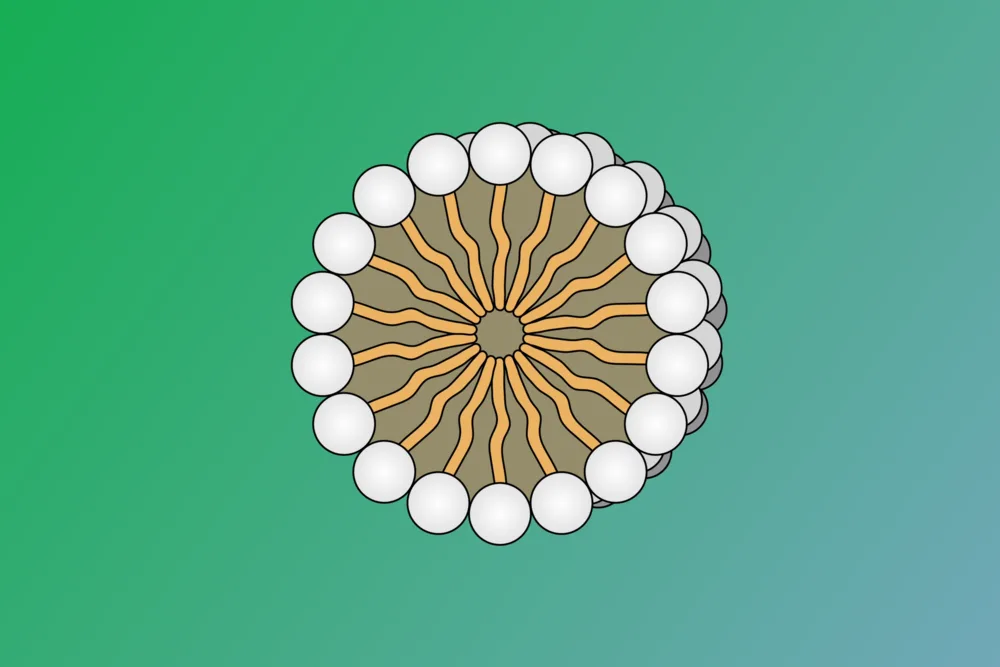
Lipids, including fats, oils and waxes, are a diverse group of hydrophobic, i.e. lipophilic, molecules that often contain long hydrocarbon chains. In contrast to other biological macromolecules, the structure of lipids is not polymeric and differs between several subtypes. Among their most important functions are the longer-term storage of energy and the role as the basic structural component of cell membranes.
This section provides a brief overview of the structure and function of lipids.
Lipid structure
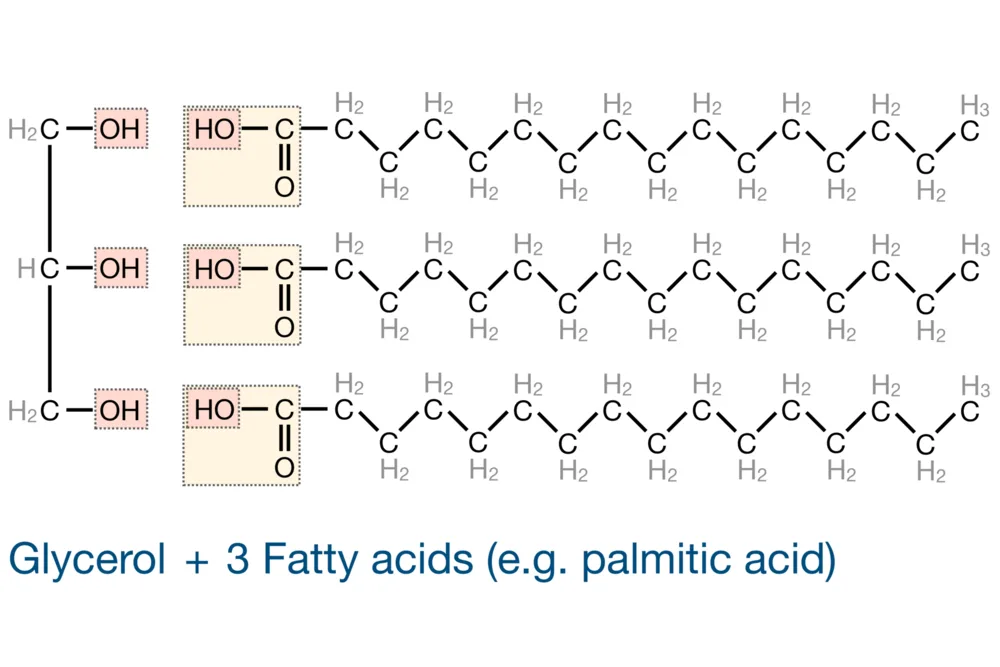
The large group of fats are structurally glycerolipids, i.e. triglycerides, which consist of glycerine and three fatty acids. The latter are build up of long hydrocarbon chains that end in a carboxyl group. Glycerine is an alcohol molecule with three hydroxyl groups, at which the carboxyl groups of fatty acids form ester bonds through condensation reactions which release three water molecules in total.
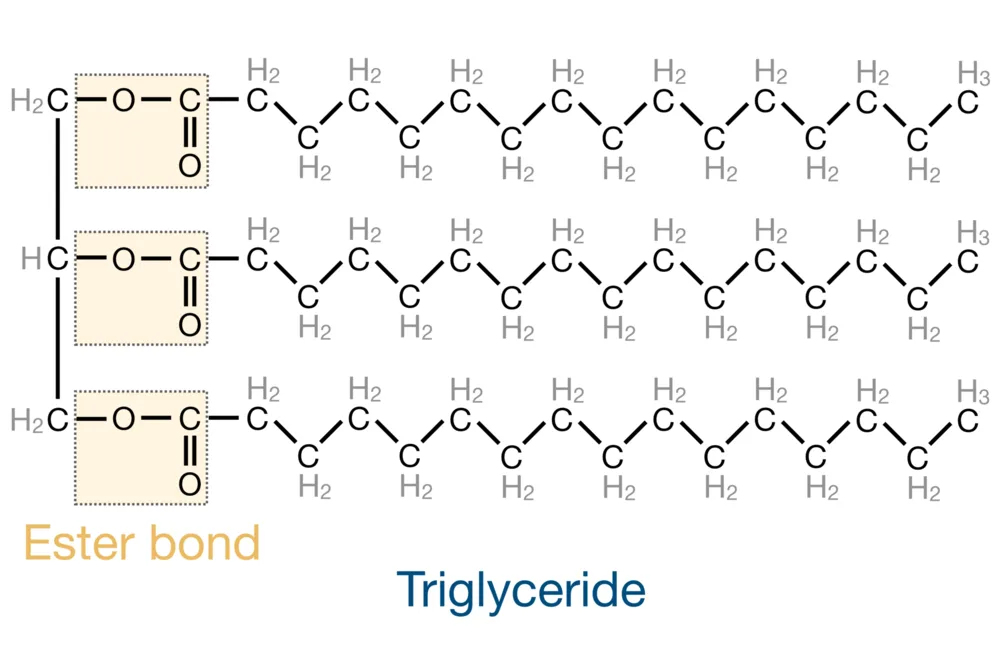
The characteristics of different triglycerides are determined by the fatty acids that are connected through ester bonds to glycerol. The three fatty acids of a triglyceride do not necessarily have the same length and they can vary in their structure. Such differences greatly impact the physical and chemical properties of triglycerides.
Fatty acids
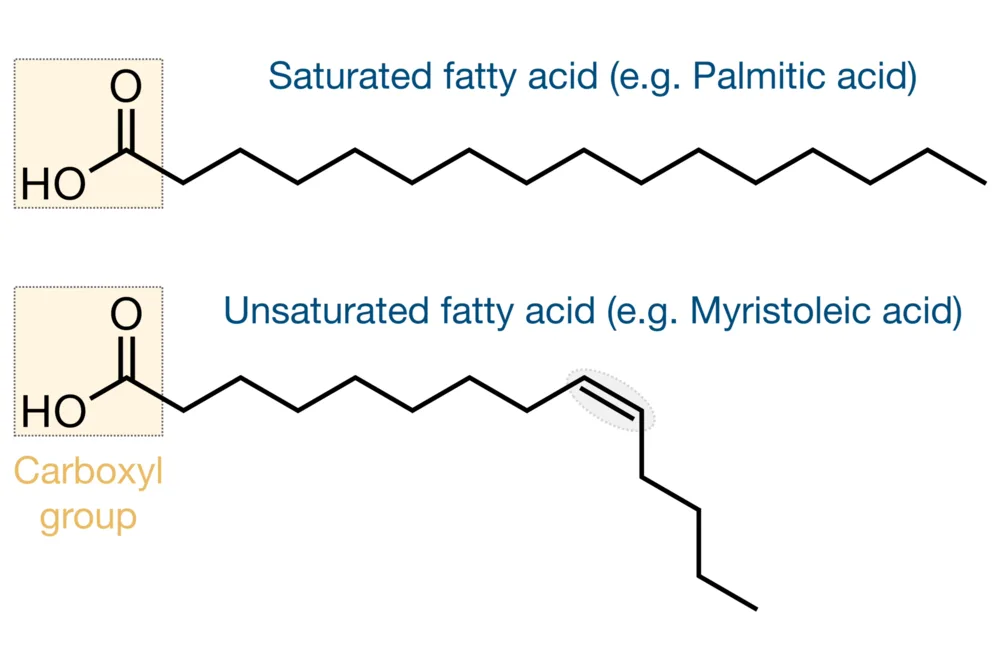
Fatty acids can be saturated, meaning that all bonds of the hydrocarbon chain are single bonds. In contrast, unsaturated fatty acids contain at least one double bond, resulting in kinks in their hydrocarbon chain, and causing them to not congregate as much as straight-structured saturated variants. Therefore, saturated fats, such as many animal fats (e.g. butter), have higher melting temperatures compared to most plant fats (e.g. olive oil).
Phospholipids
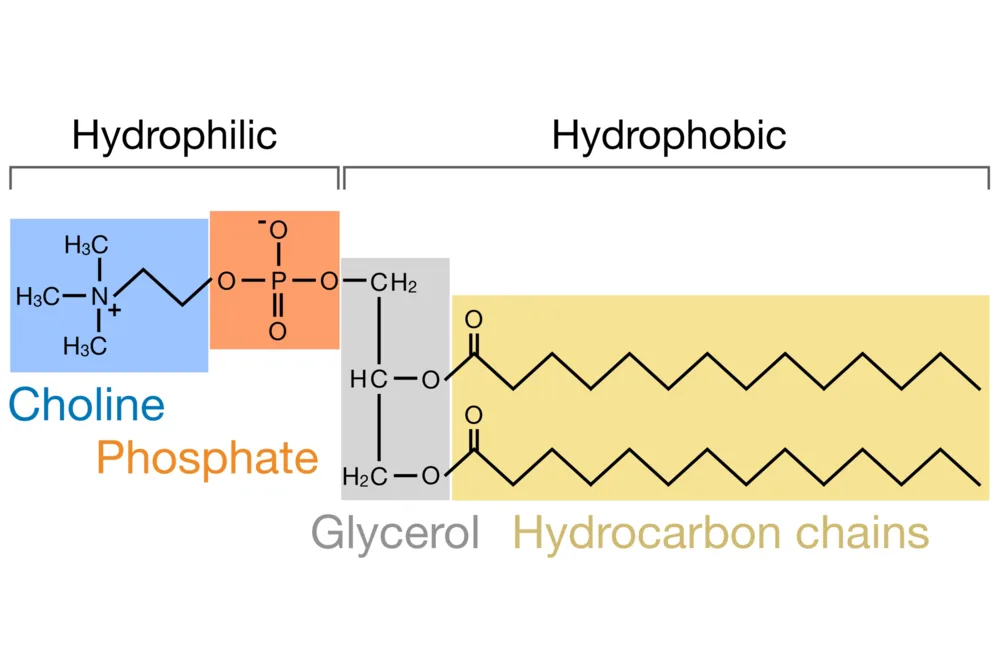
Phospholipids are structurally highly relevant as the main component of cell membranes. Instead of a third fatty acid, phospholipids have a phosphate-containing part, often with additional components such as choline, attached to glycerol. Due to its charge, this part represents a hydrophilic "head", while the fatty acids reflect a hydrophobic "tail".
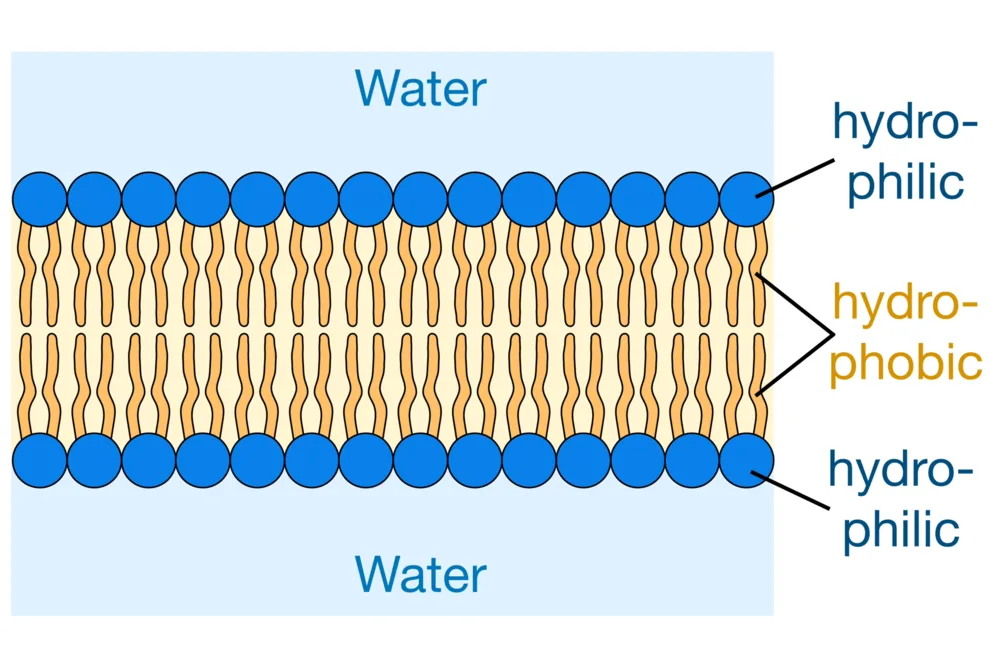
This basic structure of phospholipids causes their specific alignment in an aqueous environment. The hydrophilic (lipophobic) head orients itself towards the water molecules, while the hydrophobic (lipophilic) tails get oriented towards each other and away from water molecules. This results in the formation of a phospholipid bilayer, which envelop the content of a cell and form an enclosed barrier between outside and inside.
Cell membranes
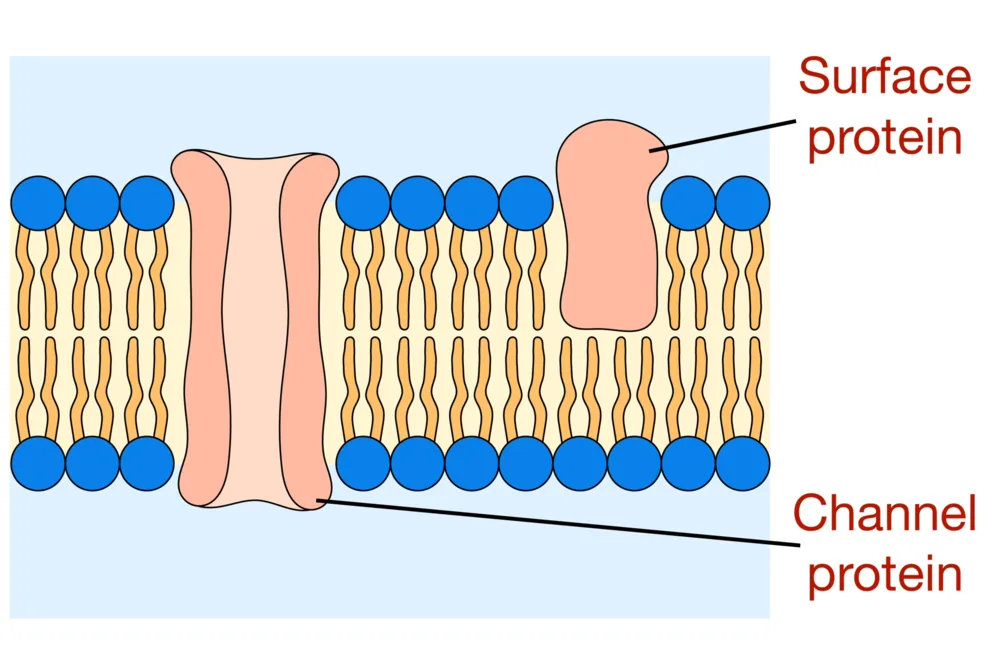
Since we are talking about cell membranes, it is important to note that phospholipids, while being the major constituent, are not their only compoment. Proteins are an important functional part of cell membranes, enabling cell signalling, transport across membranes and much more.
The next section will discuss proteins, this vast and diverse class of macromolecules, in more detail.