
Carbohydrates, which comprise sugars and sugarpolymers, have two main functions in organisms. They store and supply energy and they provide raw material for structural components. They occur as monomers and dimers, and very often as longer chains, which are sometimes branched.
This section covers structure, variety and occurrence of carbohydrates.
Carbohydrate categories
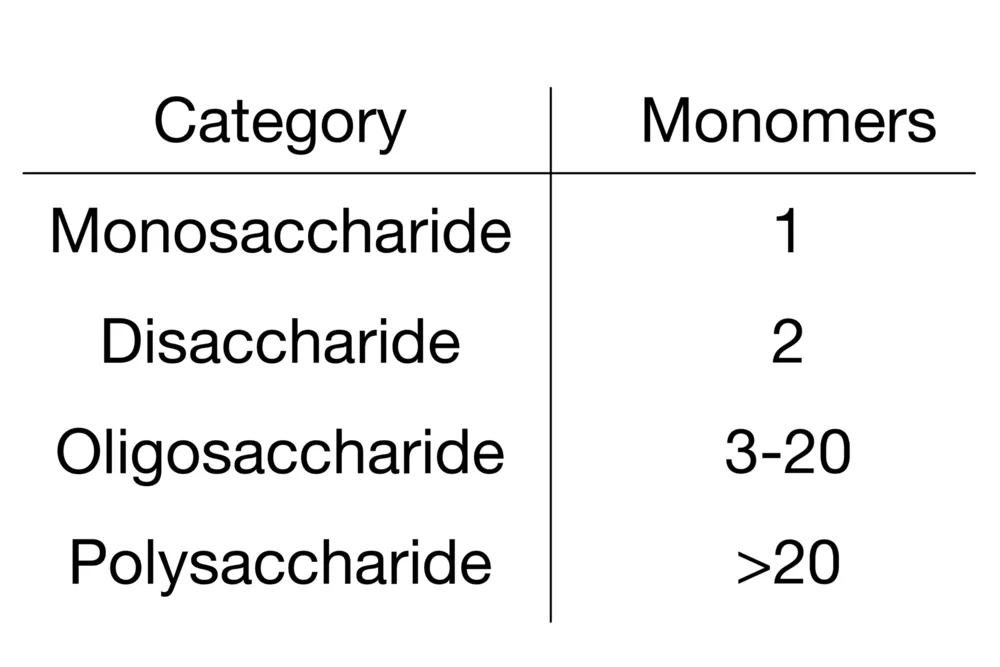
Four basic categories of carbohydrates are distinguished by their number of monomeric sugar molecules. The simplest carbohydrate is a monosaccharide, being a single monomeric unit. Disaccharides, such as the "common sugar" sucrose, consist of two linked monosaccharides. The number of monomeric units of an oligosaccharide ("oligo" being greek for few) ranges from 3 to 20, while polysaccharides are build up of more than 20 units.
Monosaccharide structures
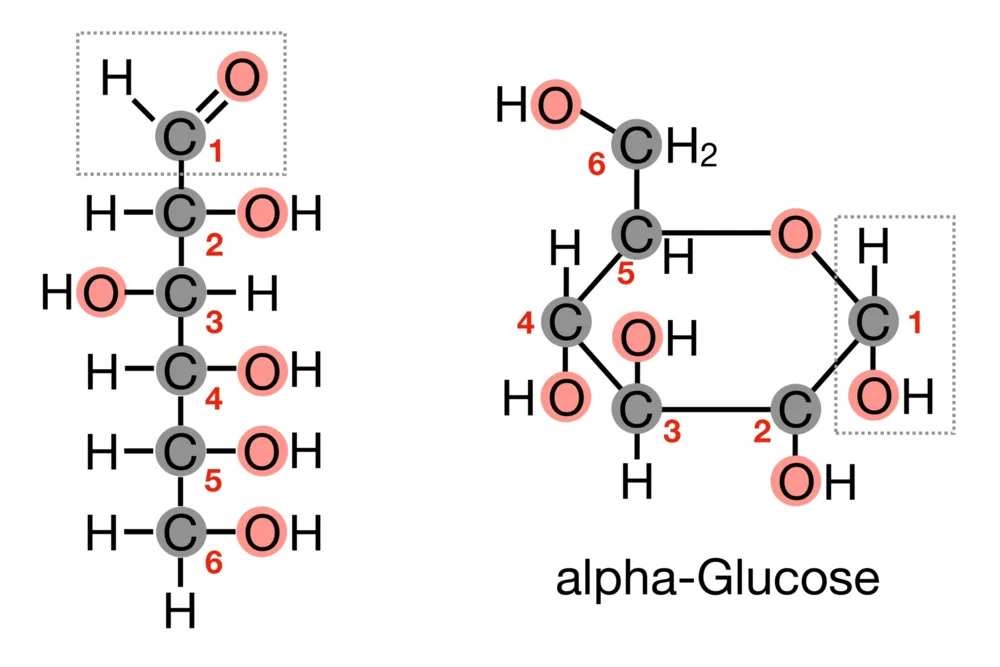
Carbohydrates are made up of of carbon (C), hydrogen (H) and oxygen (O), which is mostly part of hydroxyl groups (-OH). Monosaccharides occur partly in linear, but mostly in circular form, which is build through an intra-molecular reaction, involving a hydroxyl group that transfers a hydrogen atom to a double-bonded oxygen (here of the terminal aldehyde). Glucose, a very common sugar and a hexose (greek: six), is shown as an example. As convention, the carbon atoms are numbered serially, as shown in the depicted structures (C1-6).
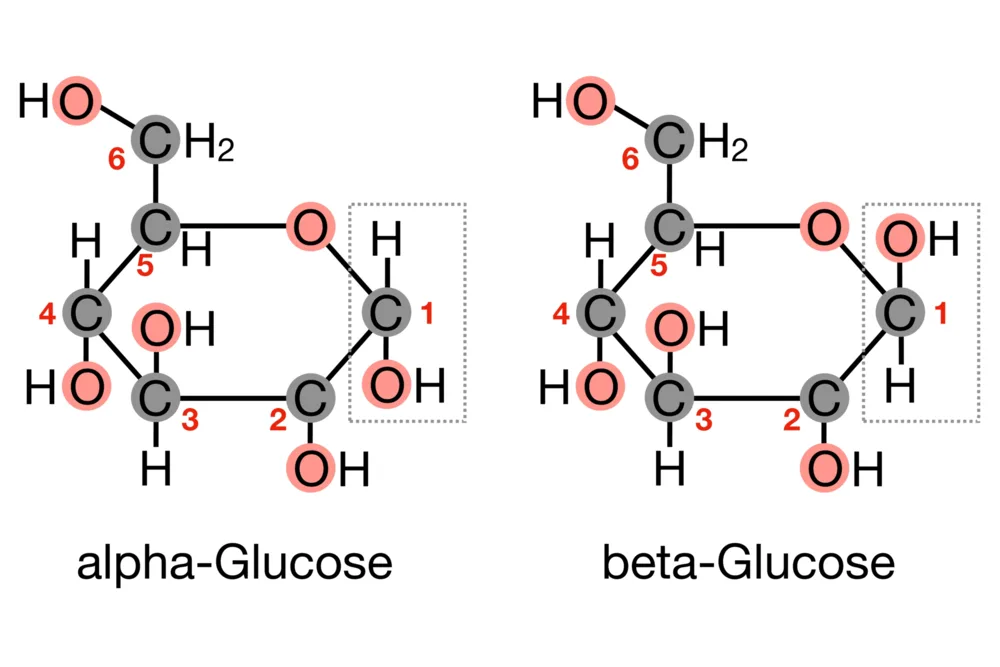
The circular form of glucose is a six membered ring structure, connecting C1 with C5, leaving C6 outside of the ring. As with other sugars, two sub-forms emerge depending on the orientation of the aldehyde group at the time of ring closure. In the alpha form, the C1 hydroxyl group points "downwards", whereas in the beta form it faces "upwards". This orientation profoundly affects the binding between mono-saccharides, which we will discuss very soon.
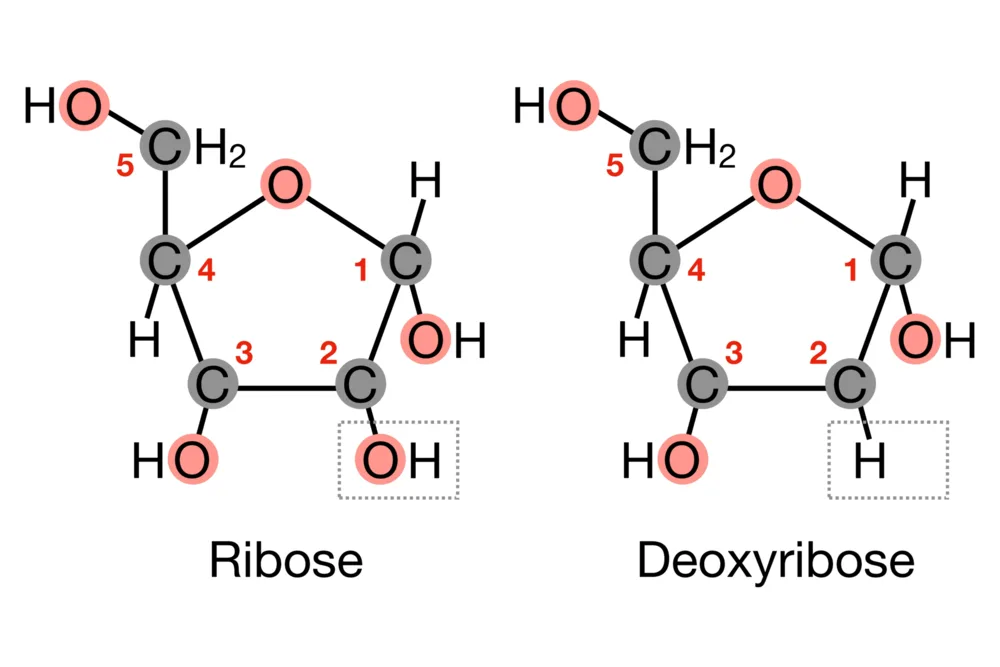
Besides hexoses, another common type are the pentose sugars, which have five carbon atoms. Geneticists in particular are very familiar with two specific pentoses with a five membered ring structure - ribose and deoxyribose. Though almost identical, they have one small but consequential difference: Deoxyribose lacks a hydroxyl group at the second carbon atom. This determines to a large part the chemical properties of DNA and RNA of which deoxyribose and ribose, respectively, are an integral part.
Disaccharides
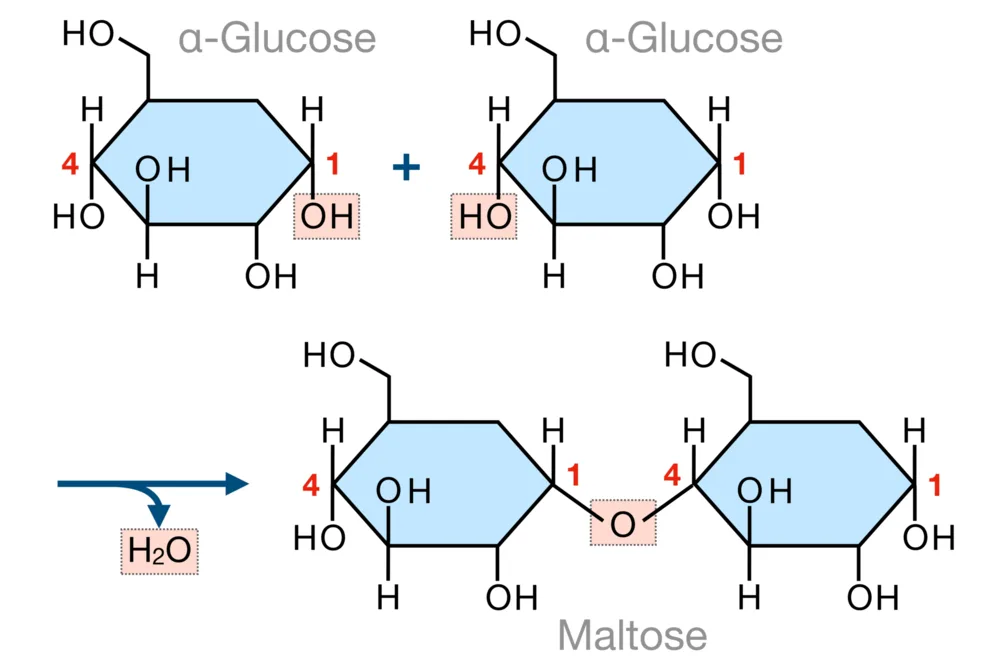
Disaccharides are formed through linkage of two monosaccharides, which however do not have to be identical. The underlying reaction is called a condensation, because the reacting hydroxyl groups of each monomer release a water molecule during bond formation. This bond is called an alpha-1,4-glycosidic bond when the reacting C1 hydroxyl group is in alpha position and correspondingly a beta-1,4-glycosidic bond involving a beta positioned C1 hydroxyl group.
Polysaccharides
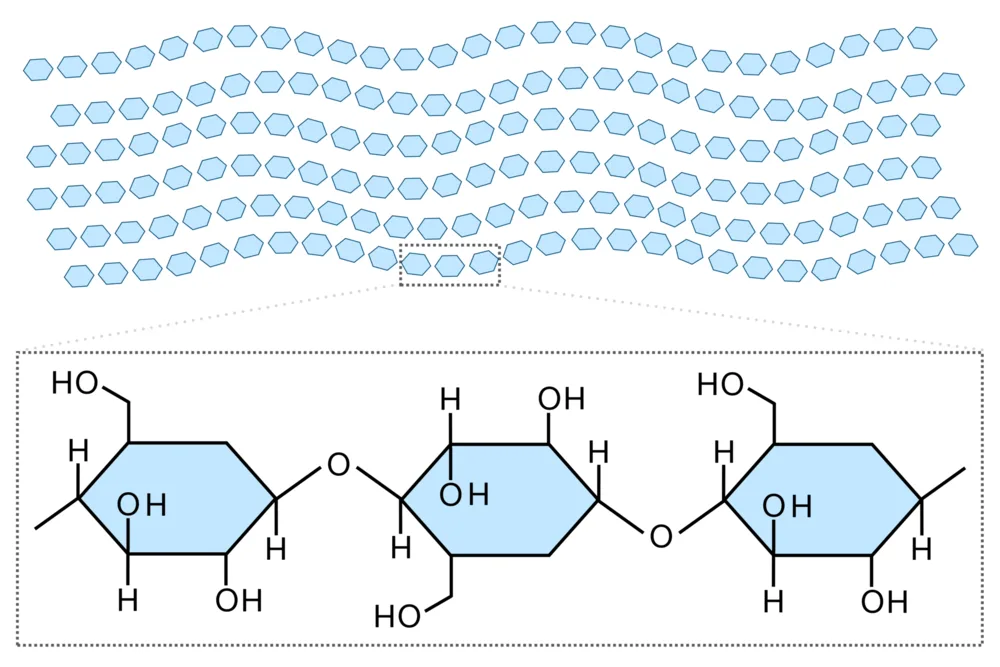
Longer chains of sugar monomers like polysaccharides are formed through a series of either alpha- or beta-1,4-glycosidic bonds. Cellulose is an example of an entirely linear polysaccharide, being linked through beta-1,4-glycosidic bonds. It is the most abundant organic polymer on earth and a crucial structural component of cell walls of plants and some other organisms. Cellulose is also the major constituent of paper and various textiles.
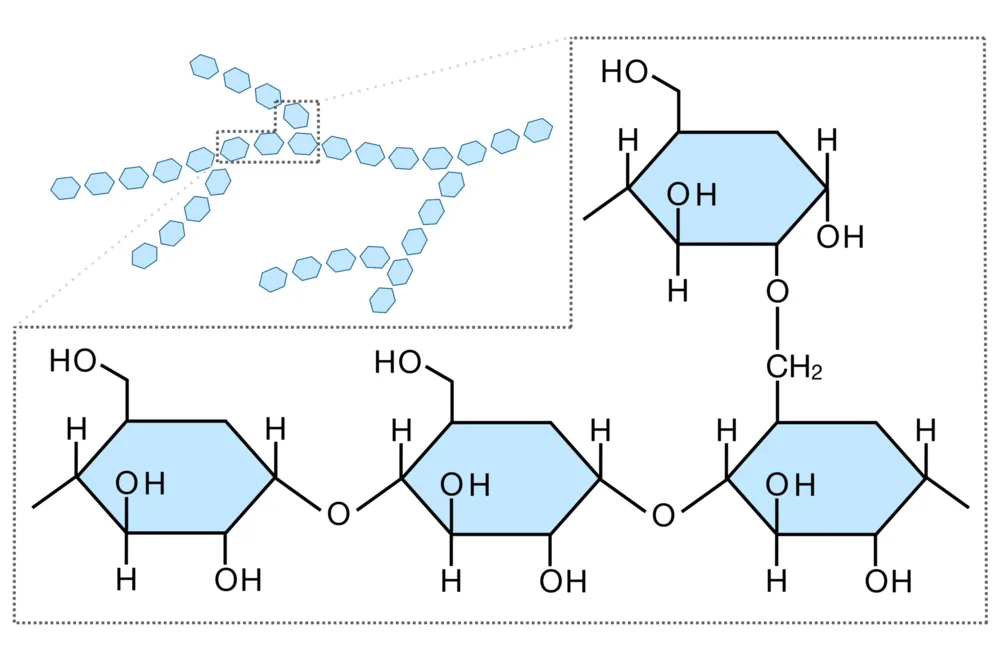
Polysaccharides can also be branched through 1,6-glycosidic bonds that are formed through a condensation reaction between a C1 and a C6 hydroxyl group. Starch, being an example of a branched polysaccharide, is used by plants for energy storage and is an important part of the human diet. Glykogen is even more heavily branched and is produced by animals, fungi and bacteria.
In the next section, we will learn about another molecule class that is important for energy storage and for structure: lipids.