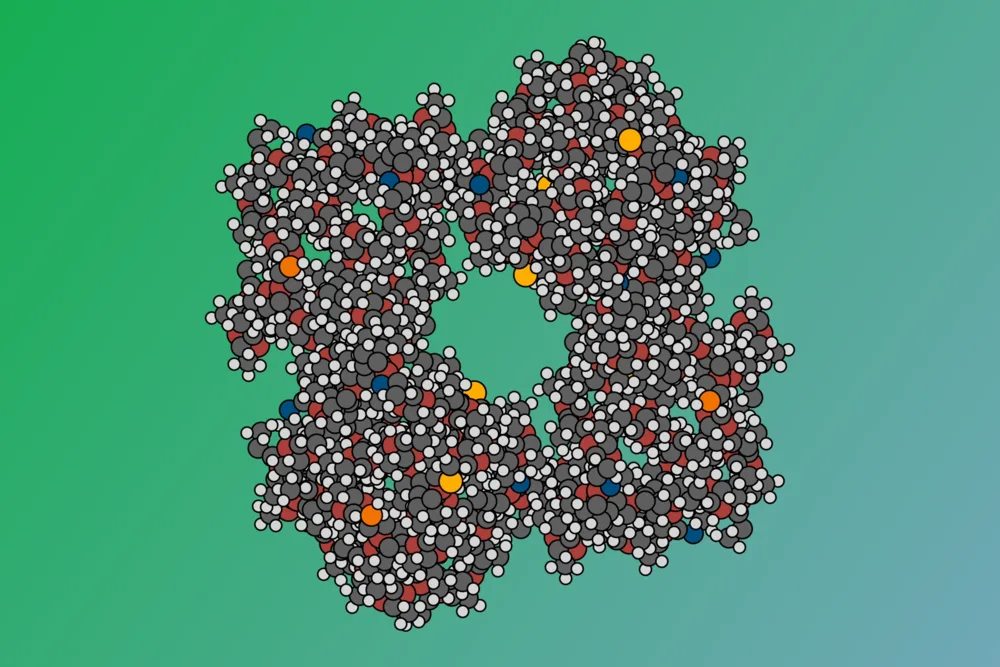
Biological macromolecules are large and sometimes gigantic chemical compounds which organisms use to build structures, store energy, catalyze chemical reactions and store, retreive and process information. They are really the very basis of biological processes in general.
This section will provide a very brief overview over the different classes of macromolecules and their constitution.
Macromolecule classes
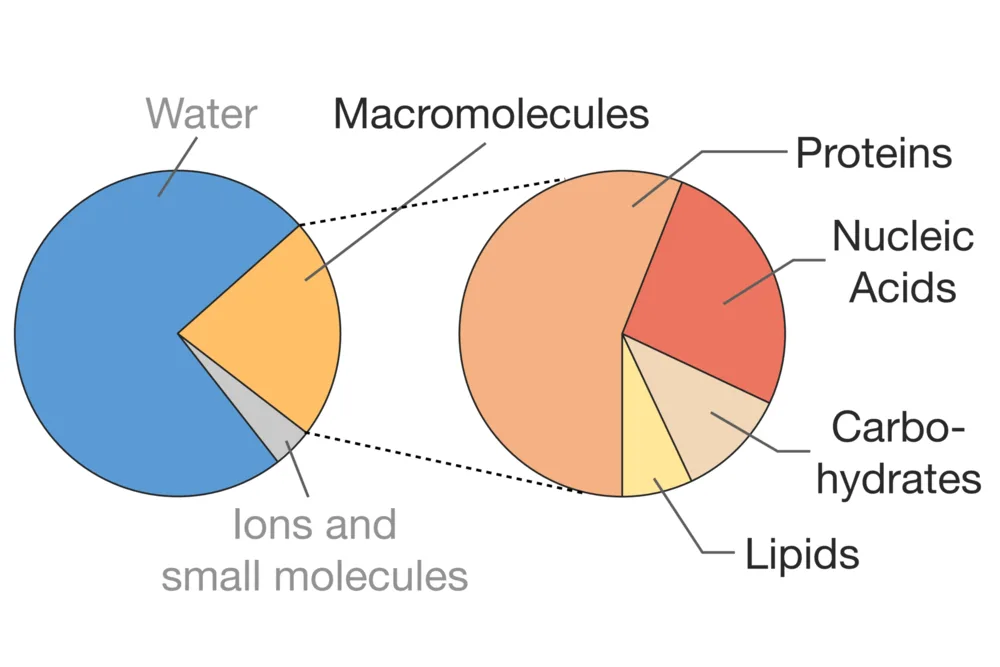
Apart from water, with a share of more than 70%, organic tissues consist mostly of macromolecules with a proportion of almost a quarter. There are four classes of biological macromolecules: Proteins, nucleic acids, carbohydrates and lipids. Proteins, which are the largest faction, have mostly structural and catalytical functions, but are also used as an energy source. Carbohydrates and lipids are most important for energy storage and structure. Finally, nucleic acids, namely DNA and RNA, mainly store and transfer genetic information.
Macromolecule structures
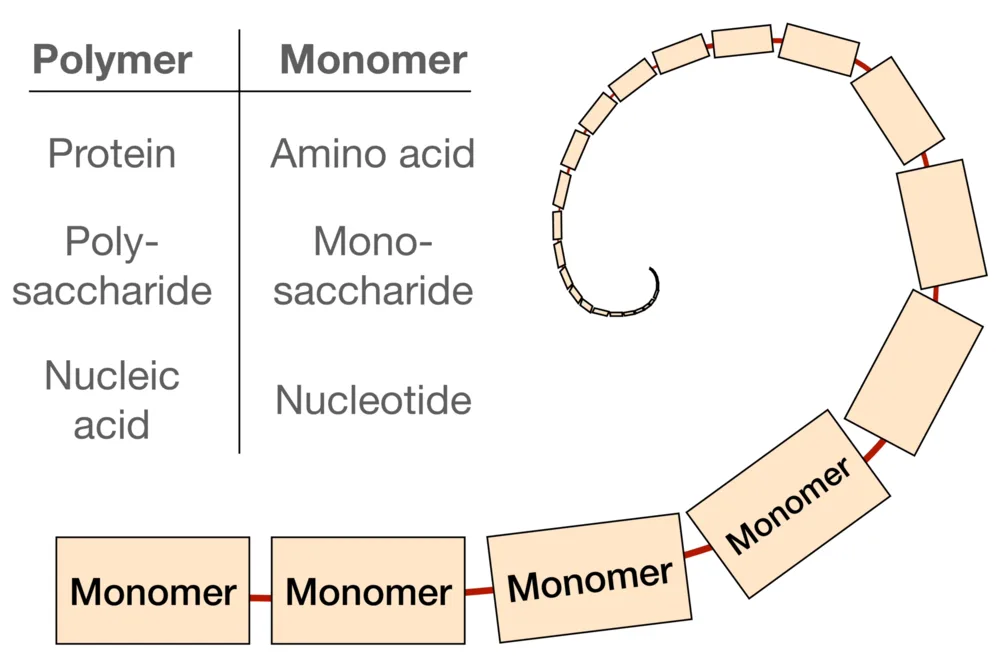
Proteins, nucleic acids and carbohydrates are polymers that consist of different linked monomeric units. Proteins are made up of amino acids, nucleic acids are chains of nucleotides, and carbohydrates (poly-saccharides) are made of sugar units. Lipids, however, do not fall in this category, as they do not have a polymeric structure.
The following sections will discuss each class of biological macromolecules in more detail.