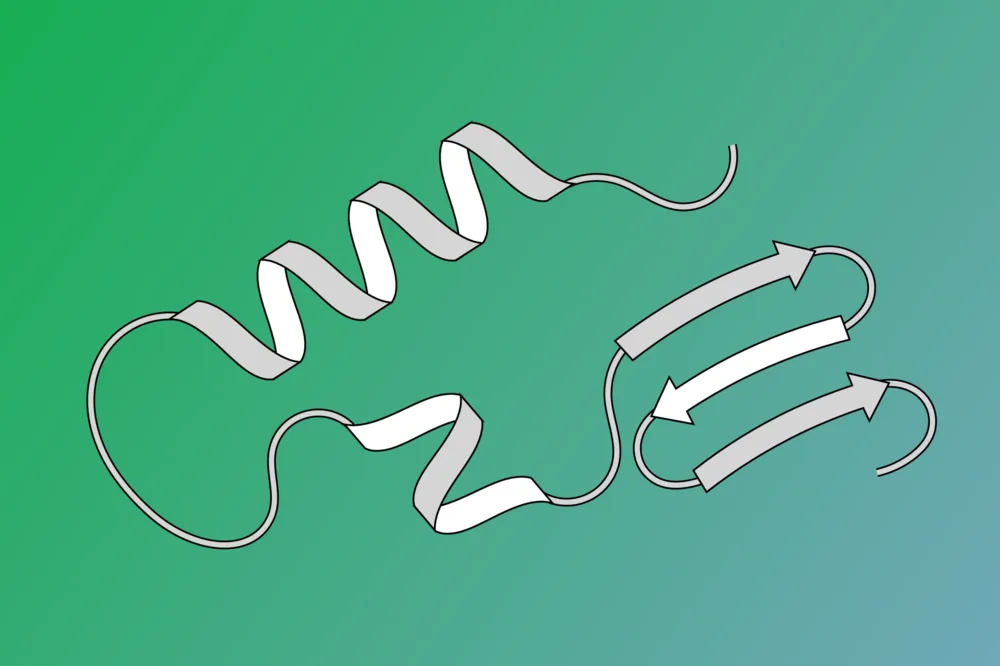
Proteins (and peptides) are amino acid polymers of varying length that have a wide range of crucial roles in structure, transport, protection, motion, catalysis and regulation. The exact functions of proteins are determined by their specific folding that is based on their unique amino acid sequence.
This section will give a brief overview of different kinds of amino acids and the general structure of proteins.
Amino acid structure
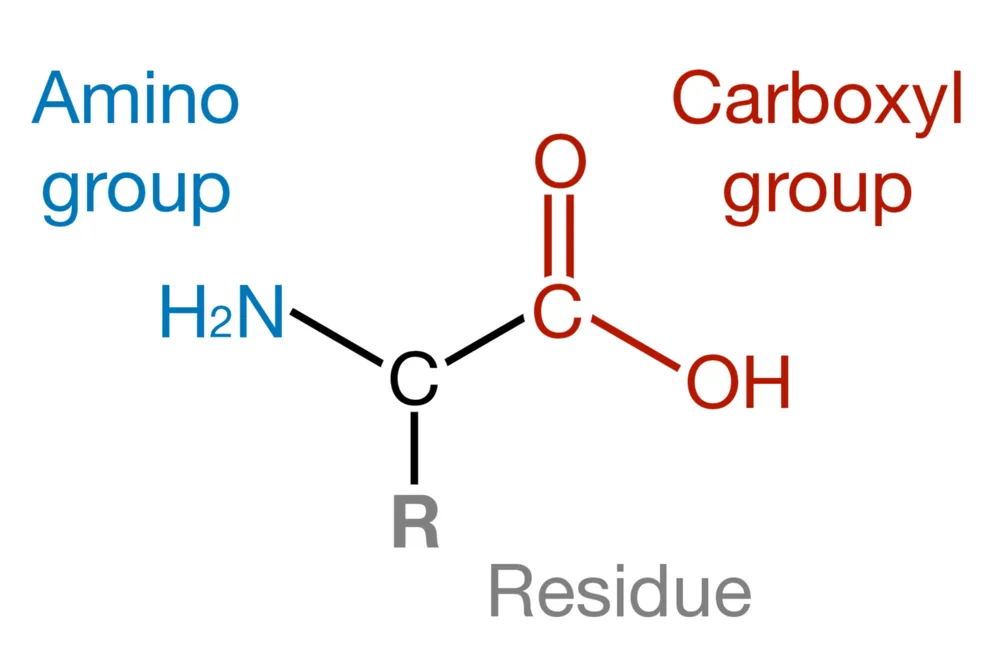
Amino acids, the monomeric units of proteins, all contain an amino group and a carboxyl group bound to a central carbon atom. Additionally attached is a hydrogen atom (which is not shown, but inferred, in this depiction) and a side chain (or residue) that distinguishes the different amino acids that are used to build a protein.
Amino acid classification
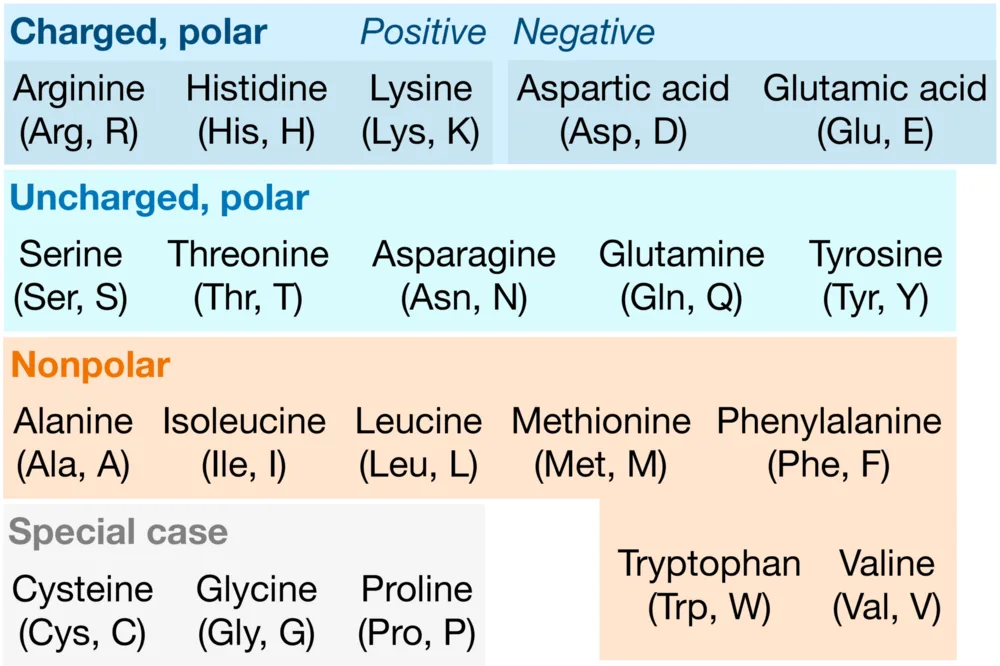
A total of 20 amino acids is usually used by organisms in the construction of proteins. While each of them has some distinct features, they can be broadly classified according to some their most important characteristics, such as polarity, which has a crucial influence on protein folding in the usually aqueous environment. Ten are polar, of which five are charged and another five are uncharged. Seven are nonpolar and three are special cases, which however can also be classified as nonpolar with the exception of cysteine.
Nonpolar amino acids
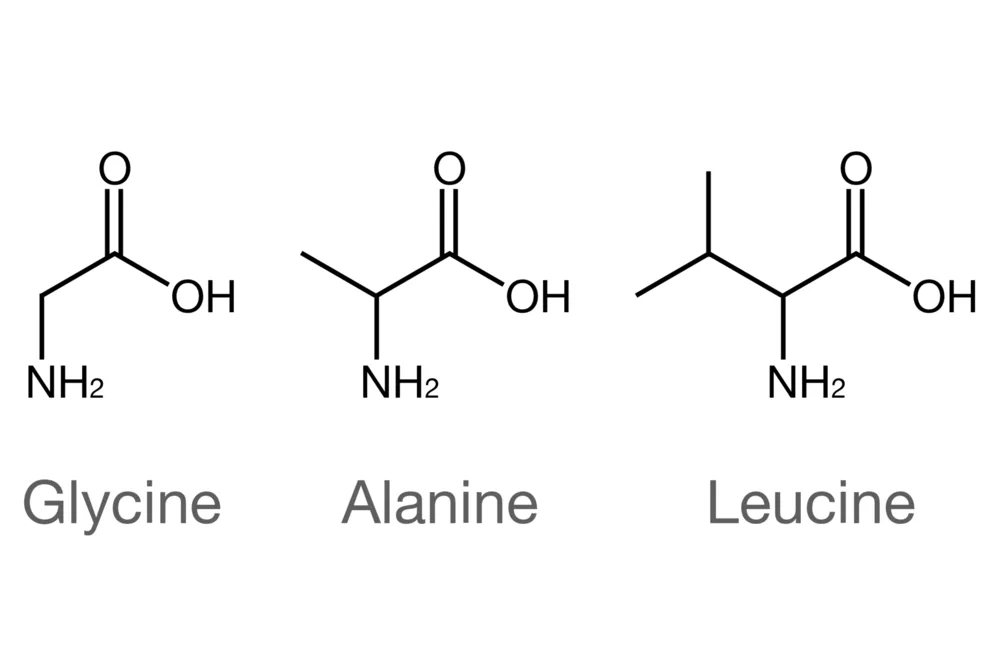
Glycine, alanine and leucine are examples of nonpolar amino acids. Glycine has also the most simple structure, since its side chain is a single hydrogen atom, which are omitted in the depicted skeletal structure. The side chain of alanine is a simple alkyl group, specifically a methyl group (-CH₃), while leucine contains a branched alkyl group, both of which are nonpolar. Nonpolar residues are hydrophobic and often found at the inside of proteins away from the water molecules of their aqueous environment.
Polar amino acids
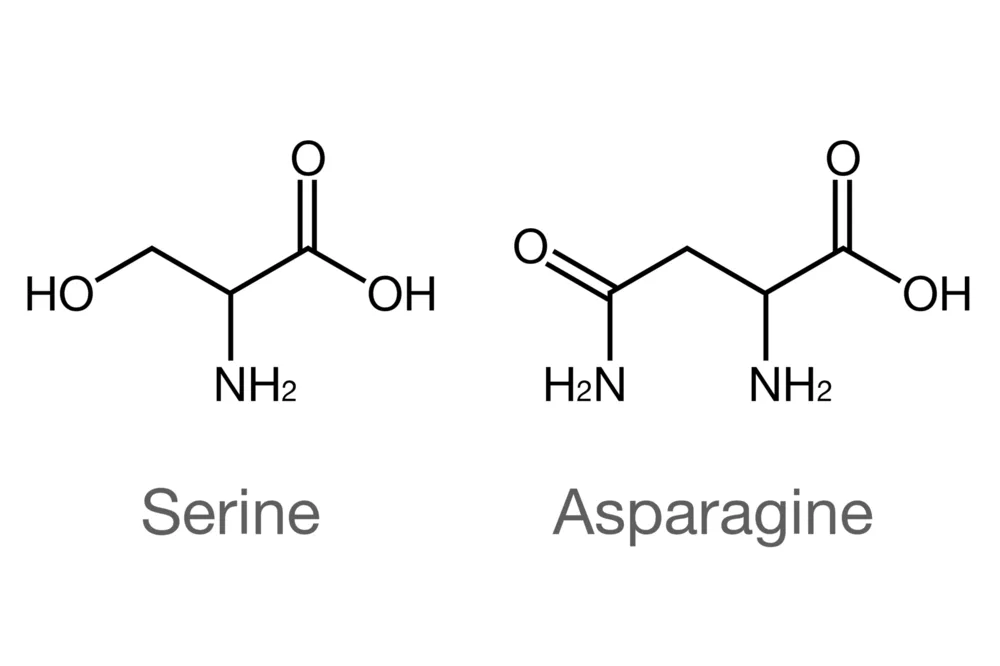
Serine and asparagine are both polar amino acids, due to their side chains that contain functional groups with unequal electro-negativities among their specific atoms. For instance, the oxygen of the hydroxyl group of serine pulls at electrons of its neighbors, creating partial charges. Their polarity makes these side chains hydrophilic, resulting in frequent localization at the outside of proteins in the proximity of water molecules.
Charged amino acids
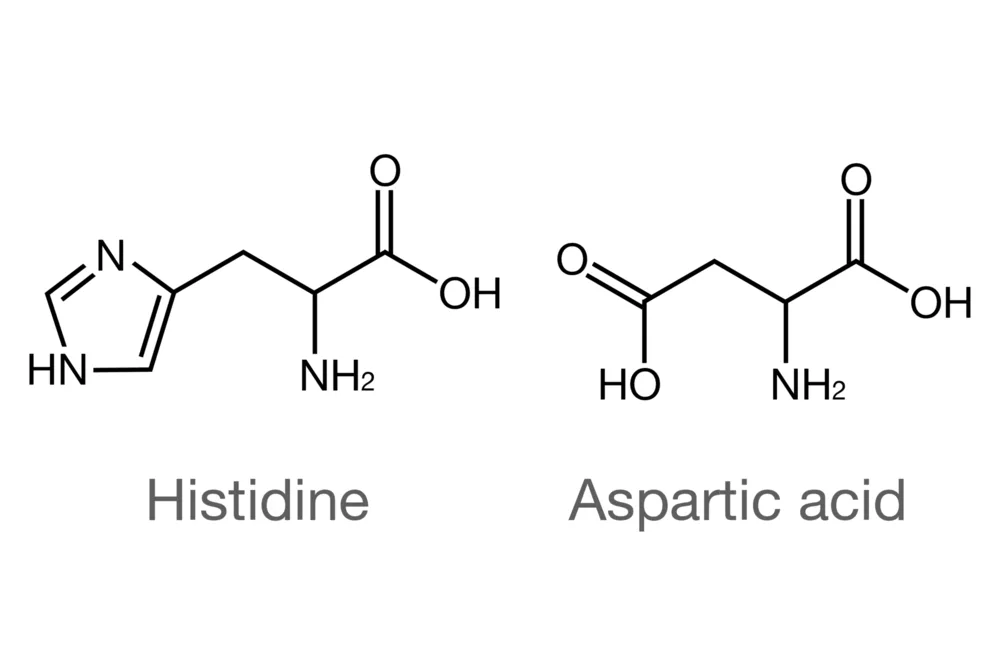
Charged amino acids have side chains that contain positively or negatively charged functional groups at physiological conditions. The imidazole side chain of histidine is mostly protonated at lower pH values, having an additional proton (H⁺) which causes an overall positive charge. Aspartic acid, just like other acids, releases a proton in solution with water, leaving a negative charge at its carboxyl group. Charged side chains are hydrophilic and therefore behave similar to polar but uncharged residues.
Other important residues
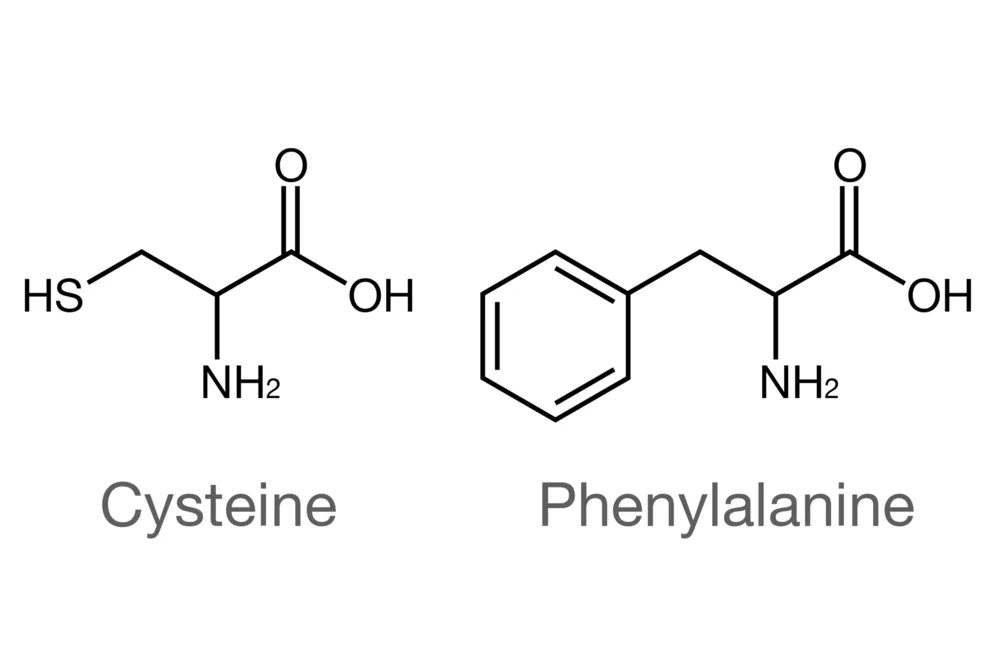
Besides polarity, other traits of certain amino acids are important for protein structures. Two cysteine side chains can form covalent disulfide bonds, thereby forming a strong connection between more remote parts of a protein and hence critically influence its structure. Other amino acids such as phenylalanine, tyrosine and tryptophan might have very large and bulky side chains that influence protein folding due to their sheer size.
Amino acid polymerization
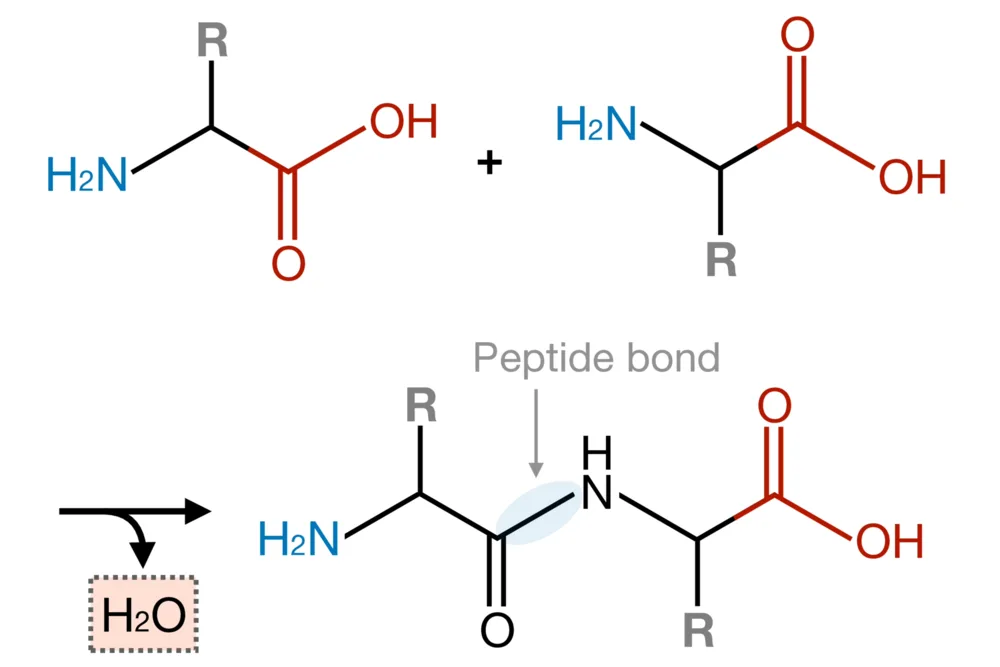
During the polymerization of amino acids, the carboxyl group of one reacts with the amino group of another to form a covalent peptide bond in a condensation reaction while releasing a water molecule. The next amino acid is added to the carboxyl group of the growing polymer, at the C-terminus of the amino acid chain. The opposide end, having an amino group, is analogously called N-terminus.
Primary structure
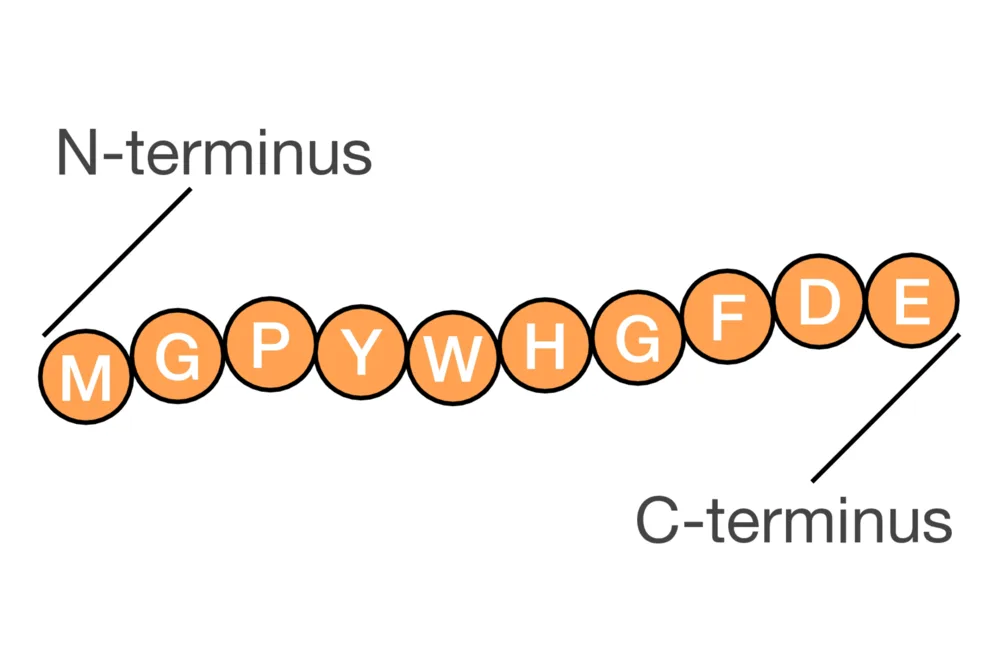
The amino acid sequence of a protein (or peptide), is read from N-terminus to C-terminus, often starting specifically with a methionine (M). The amino acid sequence is considered as the primary structure of a protein, which further determines its higher order structures.
Short (up to 50 monomers) and simple amino acid chains are called peptides, while longer and more complex chains are called proteins.
Secondary structure
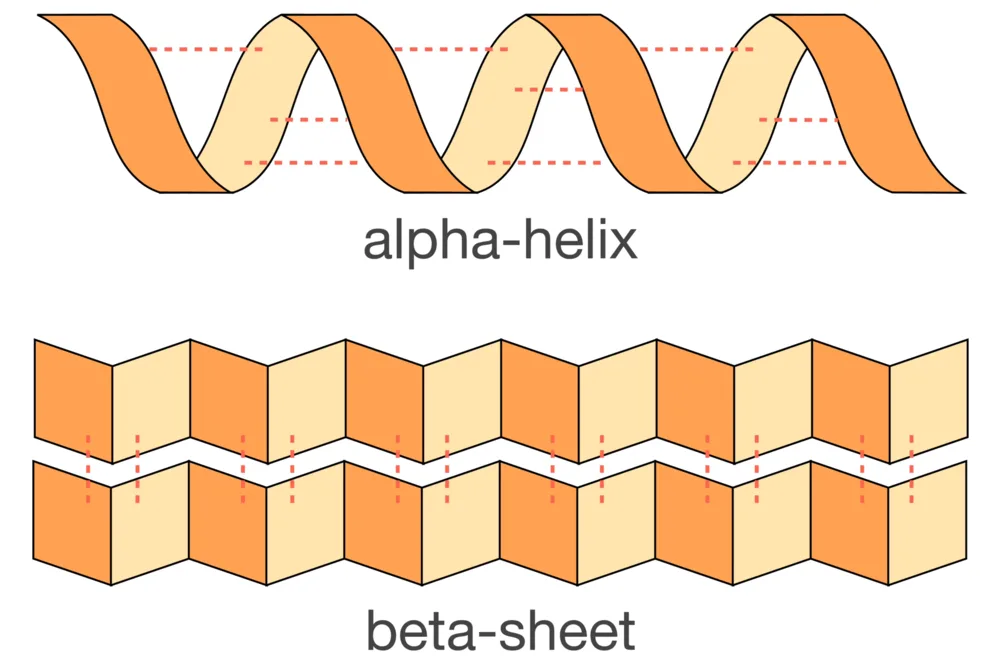
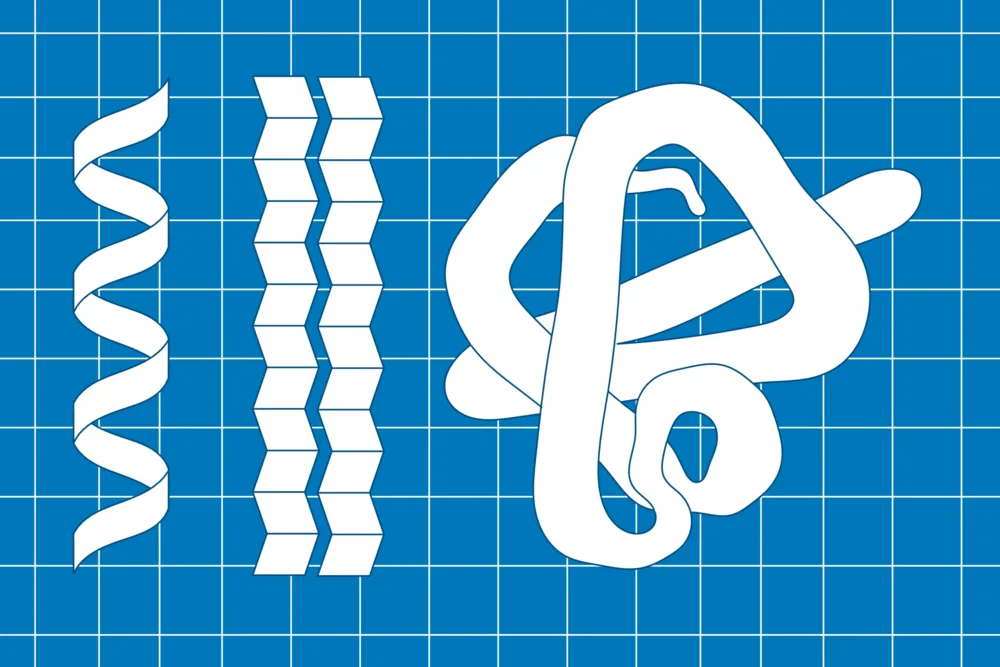
The secondary structure of a protein is made up of defined patterns that irregularly repeat along the amino acid sequence. The two basic motifs in protein secondary structures are the alpha-helix and the beta-sheet, which are both formed through different arrangements of hydrogen bonds between the CO and NH groups of the peptide backbone.
Tertiary structure
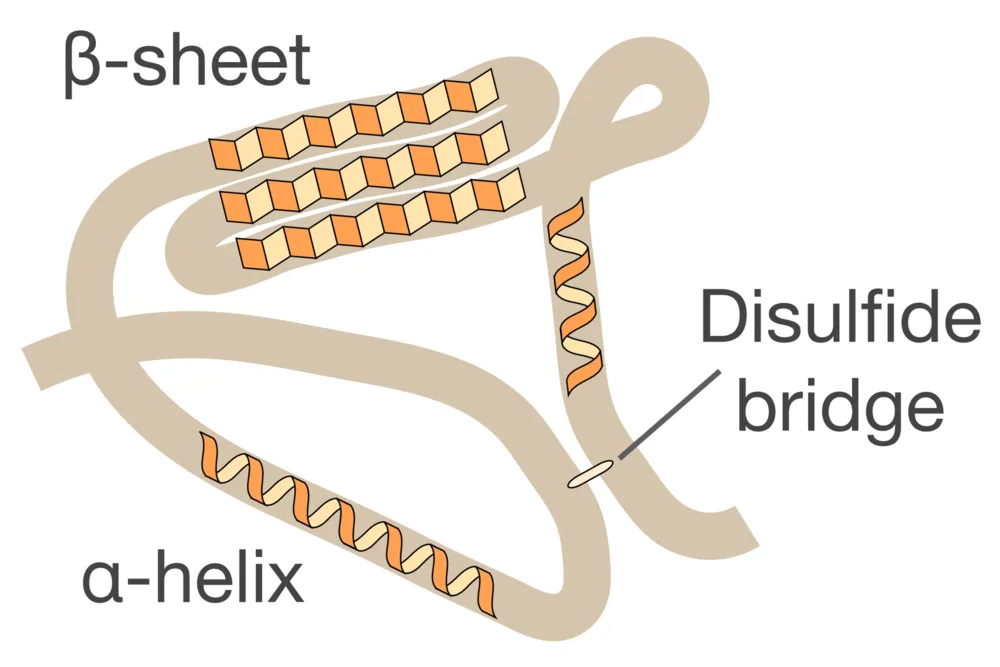
These structural elements are connected through turns and loops, which are additional kinds of secondary structures, to form the tertiary structure of a protein. Turns and loops can drastically change local paths of an amino acid chain, and different beta-sheets get stacked, together influencing the specific protein folding. The previously mentioned disulfide bonds form additional strong covalent connections between different parts of an amino acid chain.
Quaternary structure
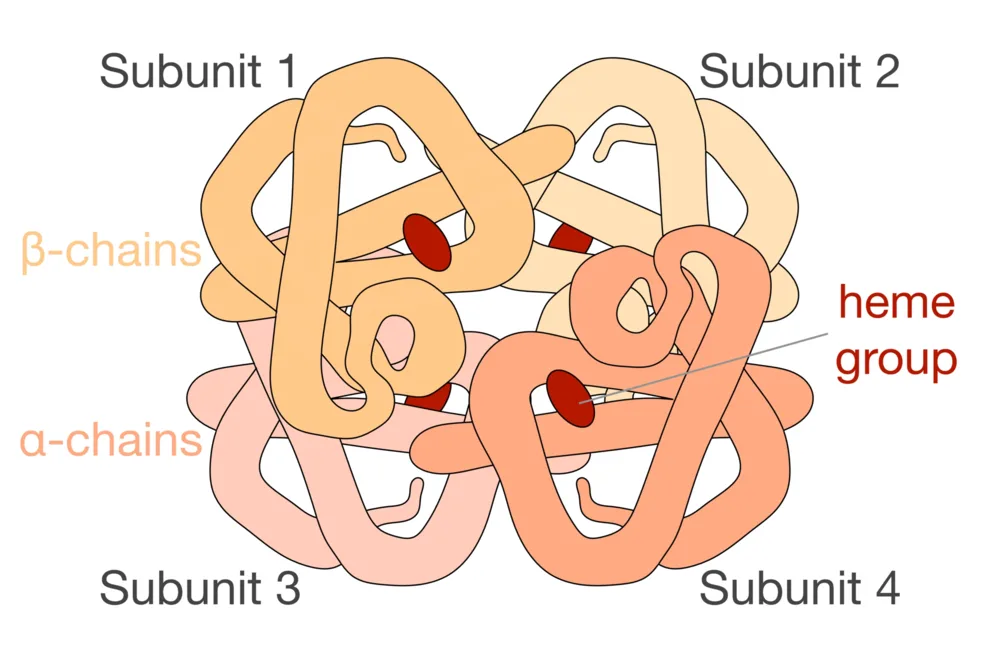
Some proteins are assembled from multiple subunits, which each are continuous amino acid chains. A well-known example for this is the depicted hemoglobin structure. This protein, which transports oxygen and carbon dioxide in the blood stream, consists of four subunits. They are held together by hydrogen bonds, ion bonds and hydrophobic forces. Also, like many other proteins, hemoglobin carries an additional component, which is in this case the iron-containing heme group.
Protein blueprints
Proteins are extremely complex and their amino acid sequence, which can be up to 27000 units long, has to be very exact to ensure their correct and specific function. A single amino acid substitution could sometimes render the whole protein useless. Organisms therefore need exact "blueprints" for the contruction of proteins. These blueprints are encoded in nucleic acids, namely RNA and DNA.
The next two sections will discuss these fundamentally important molecule classes and how their chemical structure makes them excellent carriers of information.