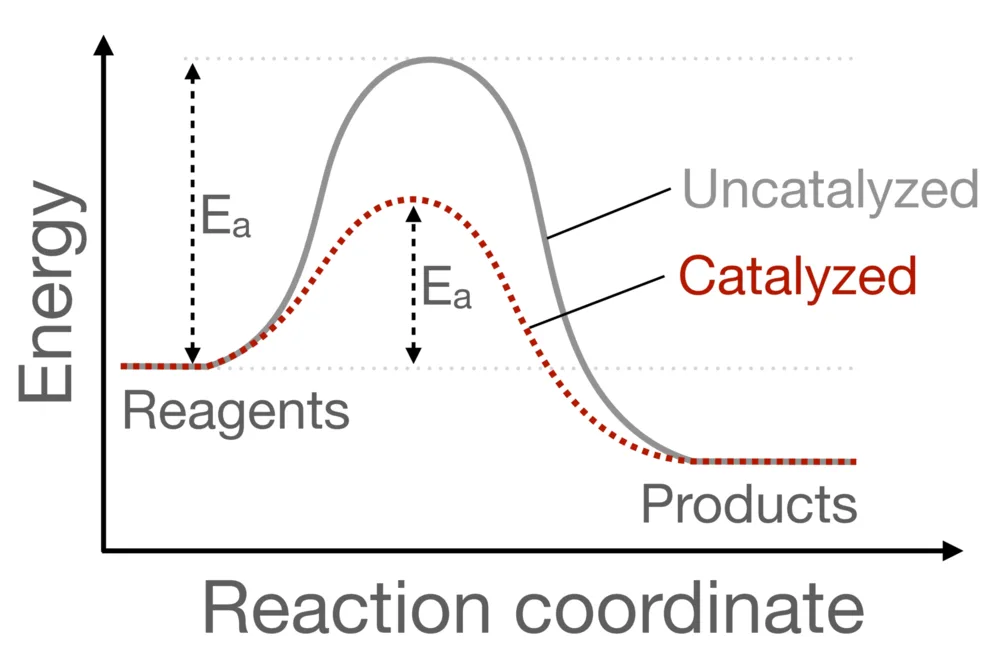
Energy barrier that every reaction must overcome
Catalysts lower it without being consumed
Even a reaction that releases energy usually needs an initial push to get started: the activation energy (Eₐ), which brings the reactants into an unstable transition state. The higher this barrier, the slower the reaction. A catalyst offers an alternative reaction path with a lower activation energy, so the reaction runs much faster, while the catalyst itself comes out unchanged and can act again. Because it does not change the energy of the reactants or the products, a catalyst does not shift the equilibrium. In cells, the catalysts are enzymes, which are mostly proteins, and a few RNA molecules called ribozymes.