Building and breaking bonds with water
How cells assemble and digest polymers
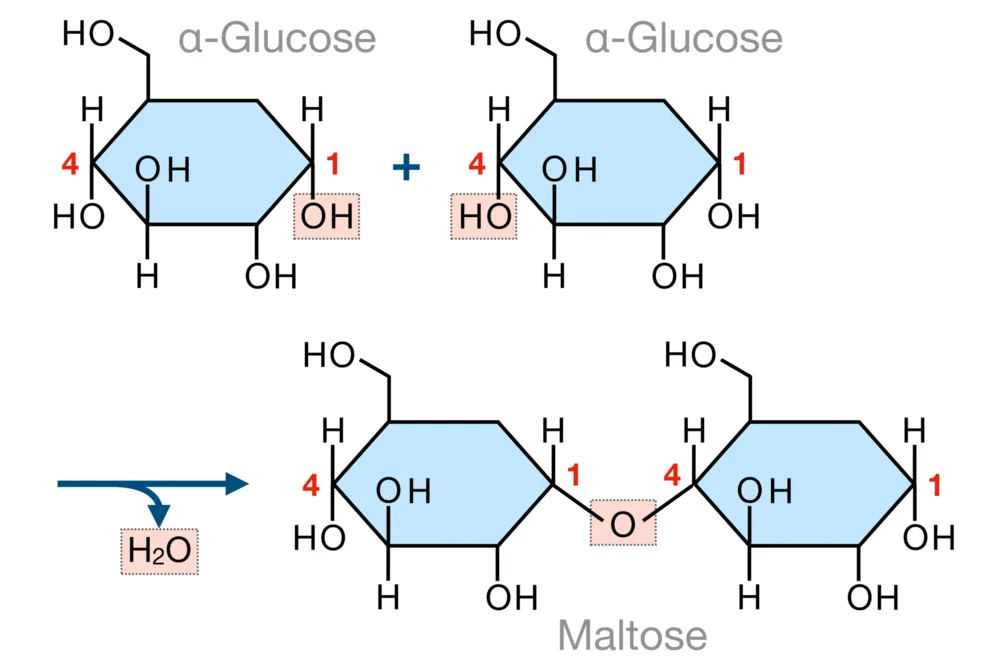
In a condensation reaction, two molecules are joined by a covalent bond while a molecule of water is released. Cells use it to link sugars through glycosidic bonds, amino acids through peptide bonds, and glycerol and fatty acids through ester bonds. Hydrolysis is the reverse: a water molecule is added across the bond and splits it, as when digestive enzymes break starch down into glucose or proteins into amino acids. Building polymers requires energy, while hydrolysis releases it, so cells use activated building blocks for synthesis and enzymes to control both directions.