
How strongly an atom pulls on shared electrons
Decides between nonpolar, polar, and ionic bonds
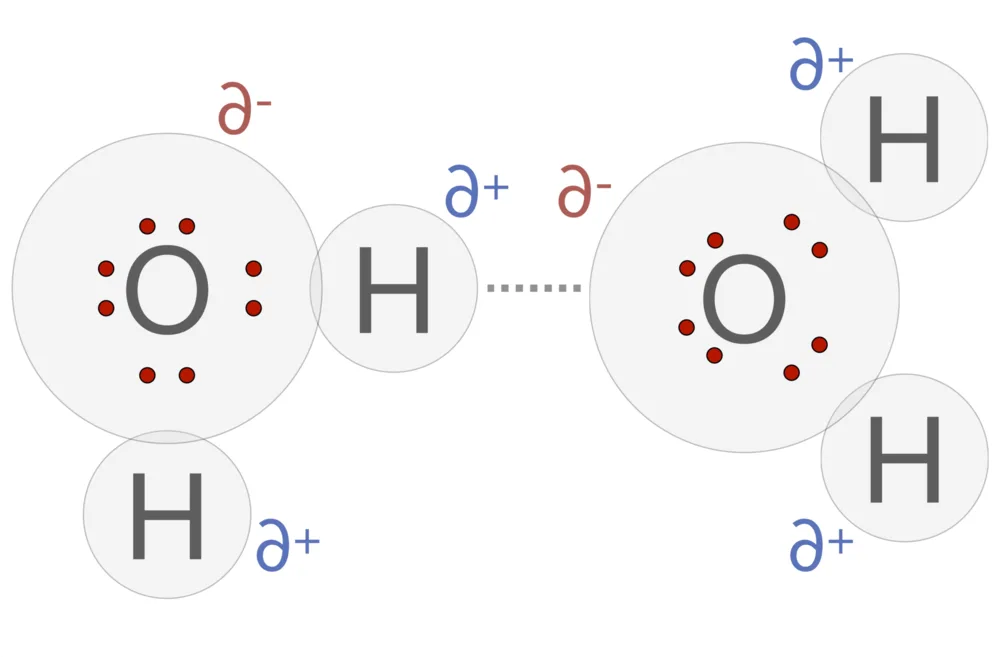
Electronegativity is the tendency of an atom to attract the electrons of a chemical bond. Among the elements of life, oxygen and nitrogen are strongly electronegative, while carbon and hydrogen differ only slightly. Atoms with equal or similar electronegativity share their electrons evenly, as in the nonpolar C–H bond. A larger difference makes the bond polar: in water, oxygen pulls the shared electrons toward itself and gains a partial negative charge (δ⁻), while the hydrogens become partially positive (δ⁺). A very large difference, as between chlorine and sodium, leads to a complete electron transfer and an ionic bond.