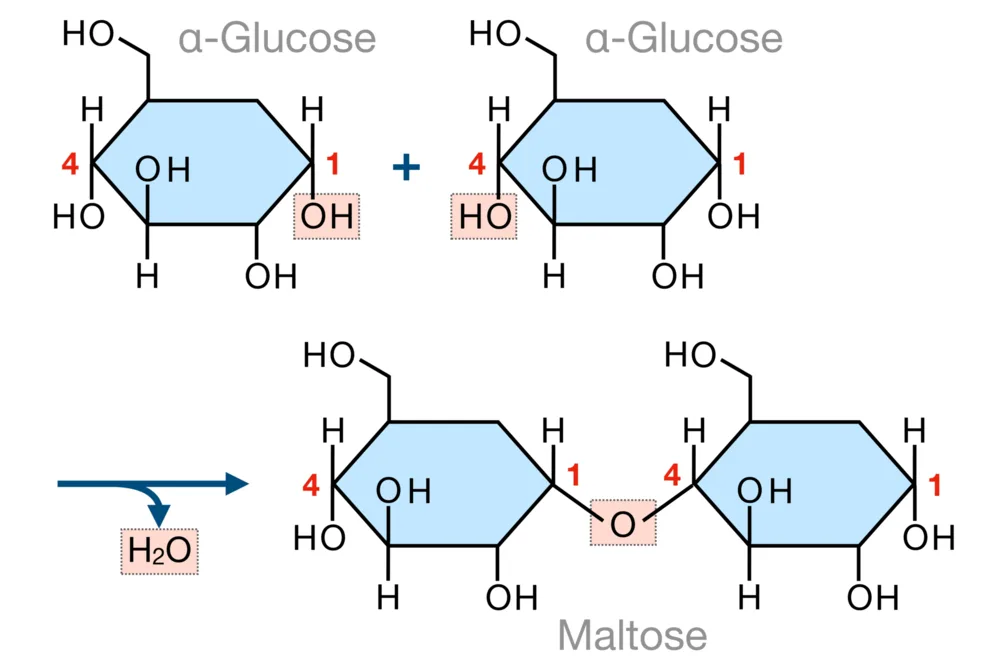
Covalent bond between sugar units
Links disaccharides and polysaccharides
A glycosidic bond joins a sugar to another molecule, most often a second sugar, usually through an oxygen bridge. It forms in a condensation reaction between two hydroxyl groups, usually including the one on the first carbon (C1) of a sugar, and releases water. Its name gives the orientation at C1 and the carbons involved: starch contains alpha-1,4-glycosidic bonds, cellulose beta-1,4-glycosidic bonds. Humans can digest starch but lack the enzymes to break the beta linkages in cellulose.