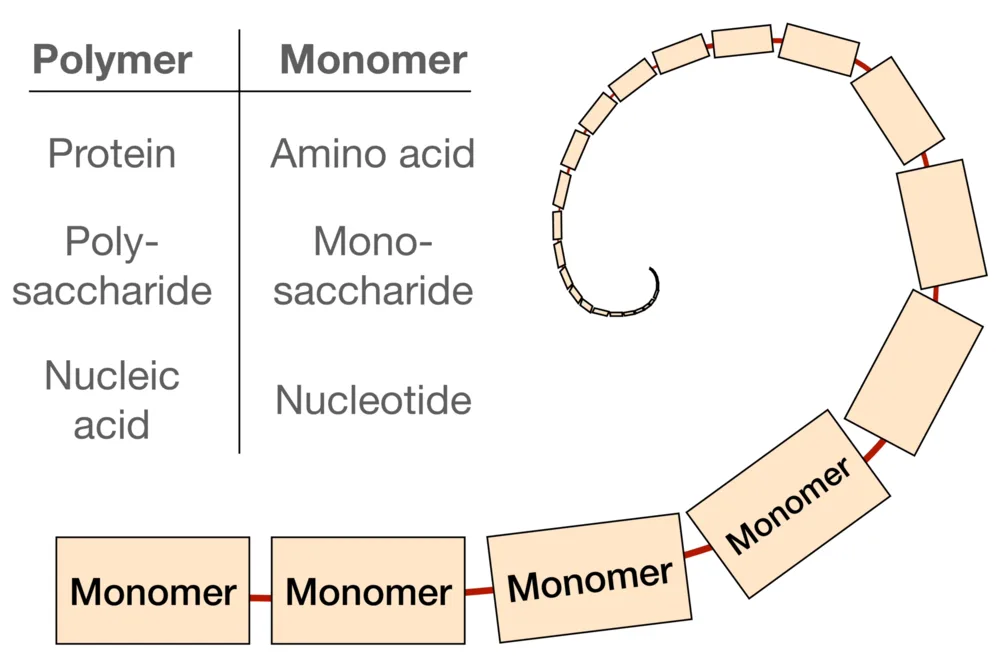
Building block vs chain of building blocks
Basis of proteins, nucleic acids, and polysaccharides
A monomer is a small molecule that can bond covalently to other molecules of its kind. A polymer is a long chain of many such units. Three of the four classes of biological macromolecules are polymers: proteins are built from amino acids, nucleic acids from nucleotides, and polysaccharides from sugar units. Lipids are not polymers. Cells build polymers in condensation reactions, which release water, and break them down by hydrolysis, which consumes water.