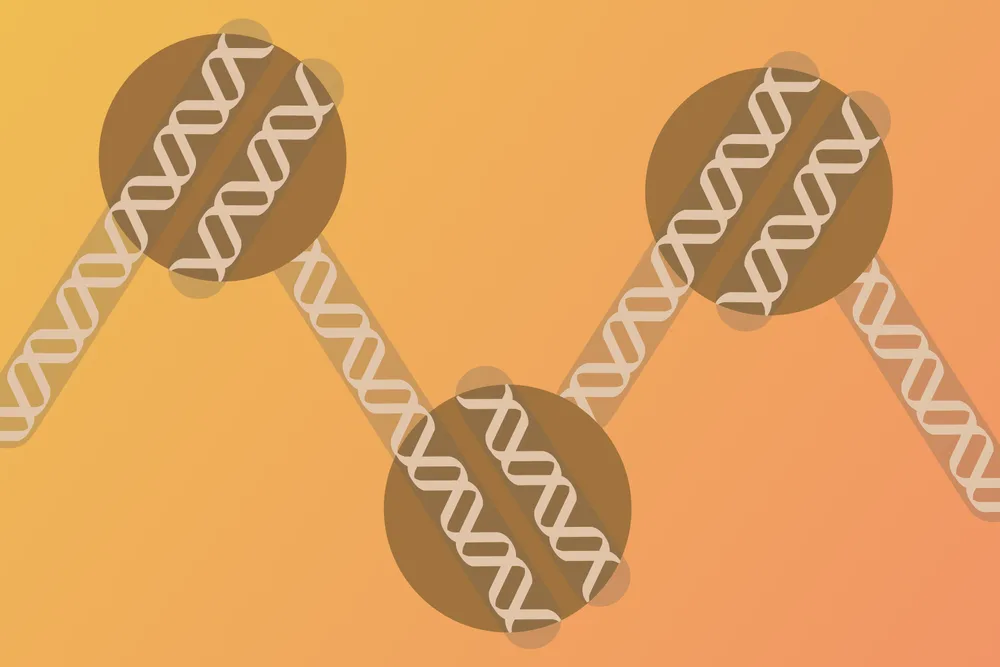
Genetics is the branch of biology that is concerned with the study of genes, genetic variation, and heredity in organisms. Chromosomes are central to genetics, as they are the carriers of genes, which are the hereditary units and the basis for genetic variation.
This section provides an overview on DNA, chromatin and chromosomes, and explains some differences between eukaryotes and prokaryotes on these topics.
DNA
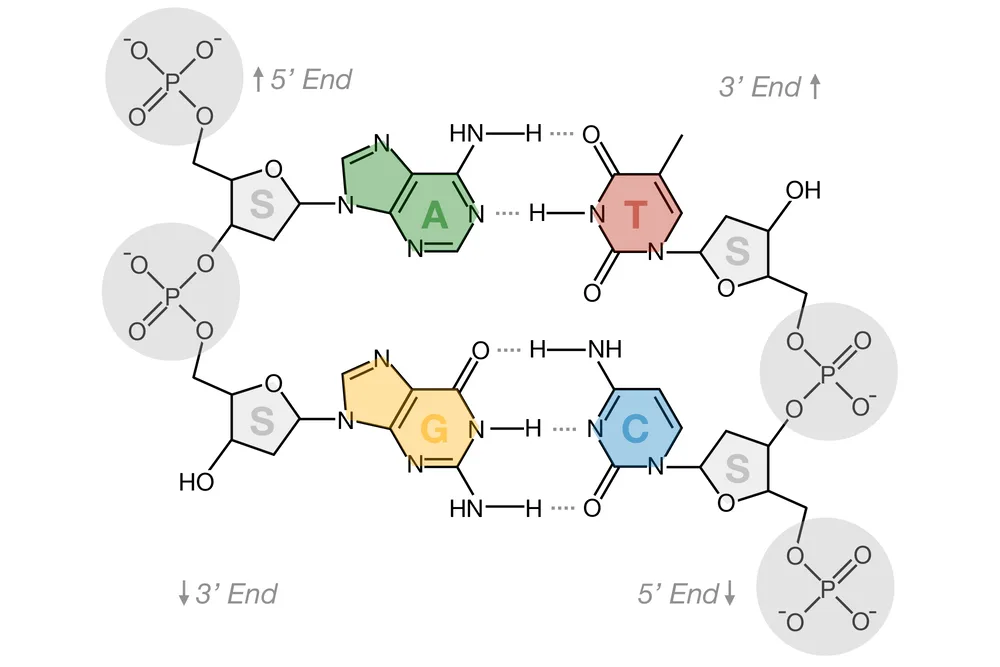
A chromosome is a long, continuous DNA molecule. It consists of two individual strands that are held together by hydrogen bonds between the nucleobases of each strand on the inside, while the sugar-phosphate backbones are oriented towards the outside. Each strand has a 5' end, ending with a phosphate group, and 3' end with a terminal hydroxyl group. The four main bases of DNA are Adenine (A), Guanine (G), Thymine (T) and Cytosine (C). Normally, A always pairs with T and G always pairs with C.
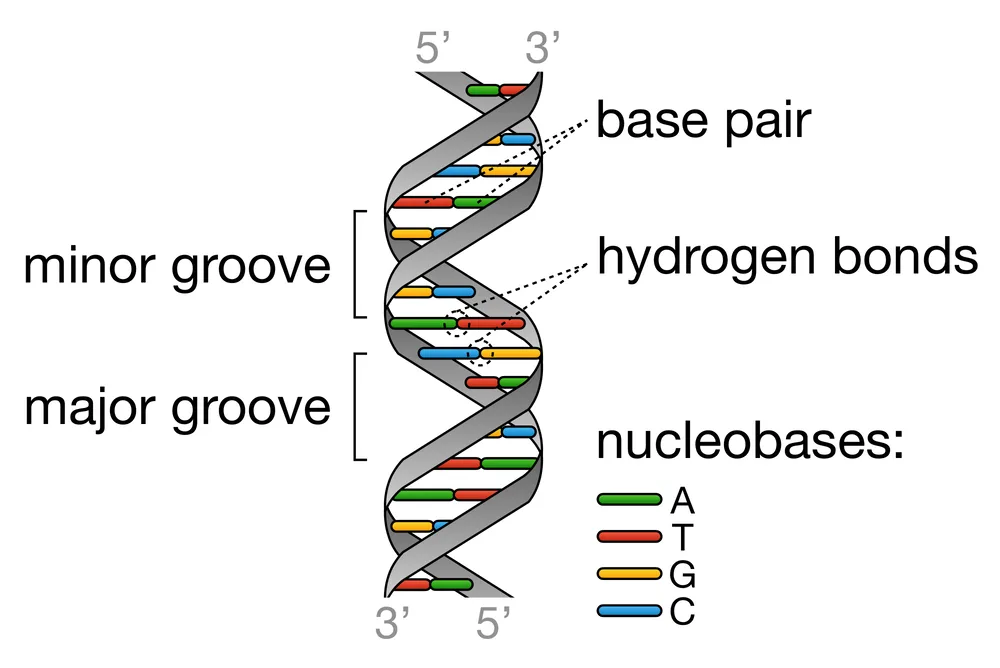
The information that is stored in DNA, lies in the specific sequence of the bases A, T, G and C, which is commonly read from 5' end to 3' end. The four "letters" of DNA are more than enough to encode any information - computers, for example, only use 1s and 0s. The two strands, which form a continuous double helix, are arranged in an antiparallel fashion, making the respective sequences reverse complementary between the strands in a given DNA segment, e.g. 5'-ATG-3' on one strand is 5'-CAT-3' (= 3'-TAC-5') on the opposite strand.
Prokaryotic chromosomes
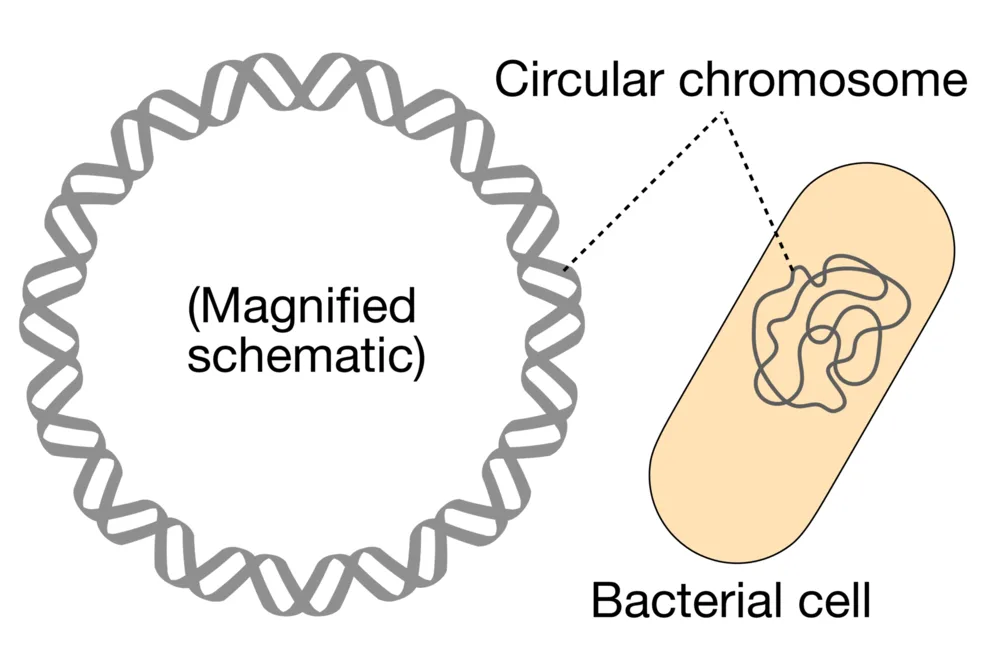
Prokaryotic cells (bacteria and archaea) usually have only one circular chromosome, which makes up the entirety of their genetic information, i.e. the whole genome. However, they can also contain one or more much shorter circular extra-chromosomal DNA molecules, named plasmids, which carry non-essential genetic information and which can be transferred from cell to cell. The size of prokaryotic chromosomes ranges from 500,000 base pairs (bp) to over 10,000,000 bp.
Eukaryotic chromatin
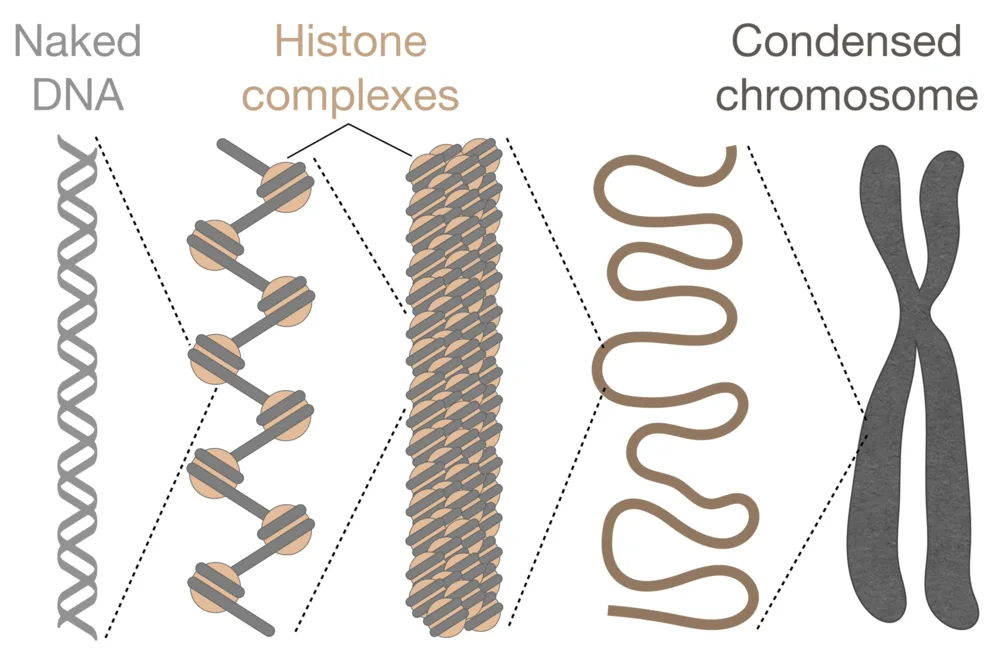
The chromosomes of eukaryotes (protists, fungi, plants and animals) are generally more complex than those of prokaryotes. Firstly, eukaryotic genomes normally consist of more than just one chromosome, and they are not circular, but linear. Further, eukaryotic chromosomes have a complex packaging with multiple layers of tightened organization, i.e. condensation. On the first level, DNA is wrapped (with 1.65 windings) around protein complexes which are called histones, forming something like a long string of beads.
Just this first organizational level makes the chromosomes much more compact in length, while the DNA is still accessible to a large extend. This DNA-histone complex, which is called chromatin, is then further condensed, i.e. tightened, until it is so compact that it becomes visible under a light microscope as the typical and distinct chromosome structure. Through this packaging, the chromosomes become about 10,000 times more compact than the "naked" DNA without any histones.
Eukaryotic chromosomes
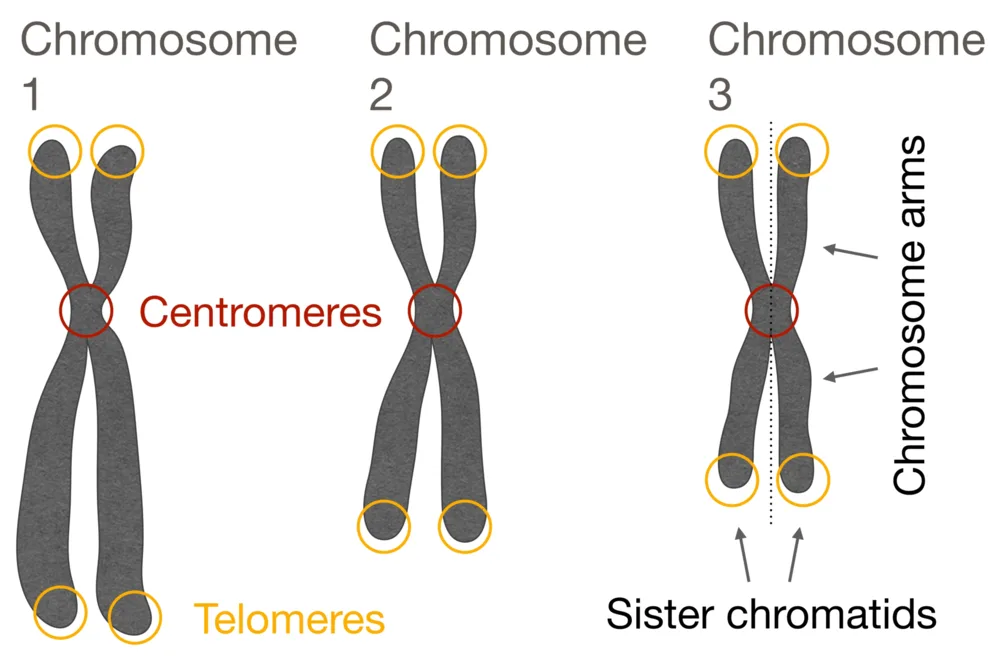
Different species have different numbers of chromosomes per cell, which are also unequal in their size. Every chromosome, however, has a centromere and telomeres at the ends of the chromosome arms, both of which are crucial functional parts that we will discuss later in detail. Each of the depicted chromosomes have two so-called sister chromatids, which are identical copies of the chromosome sequence, attached to each other at the centromere. Most of the time, however, chromosomes are not duplicated, existing as only one chromatid.
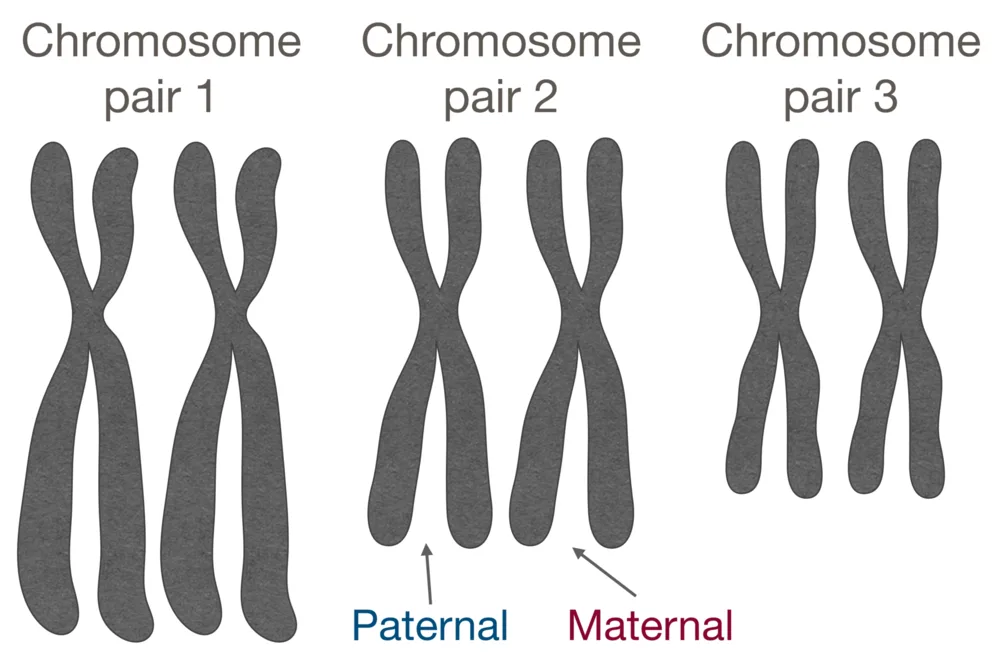
The full set of chromosomes per cell represents the genome of an organism. Animals and seed plants have homologous pairs of each chromosome with one from the father (paternal) and one from the mother (maternal), respectively, resulting in two homologous chromosome sets in total. Cells that have pairs of chromosomes are called diploid (symbol: 2n), while cells that contain unpaired chromosomes are called haploid (symbol: 1n). In animals, only gametes, i.e. sperm cells and oocytes (egg cells), are haploid; in seed plants, gametes and reduced gametophytes are haploid.
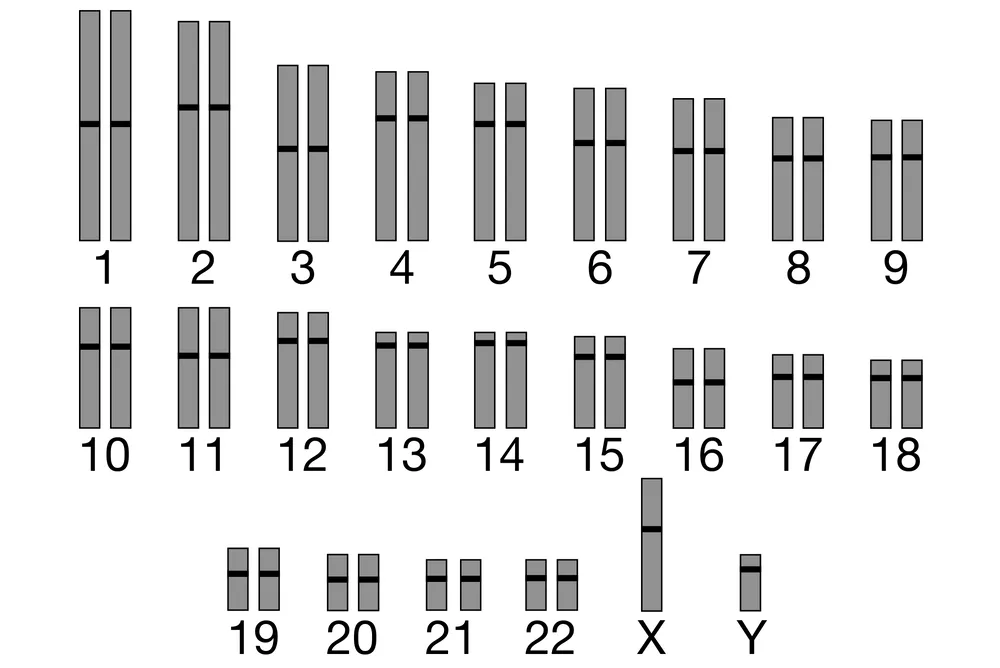
Humans have a set of 23 chromosome pairs, i.e. 46 in total per diploid cell. 22 pairs (1-22), which are called autosomal, are fully homologous, but the last pair is quite different. As common among mammals, birds, insects and vascular plants, the last pair consists of sex chromosomes, called "X" and "Y" in mammals, that are unequal in size and DNA content. These chromosomes determine the sex of an organism. Mammalian males, for instance, have an X and a Y chromosome (XY) and females have two X chromosomes (XX).
Chromatin states
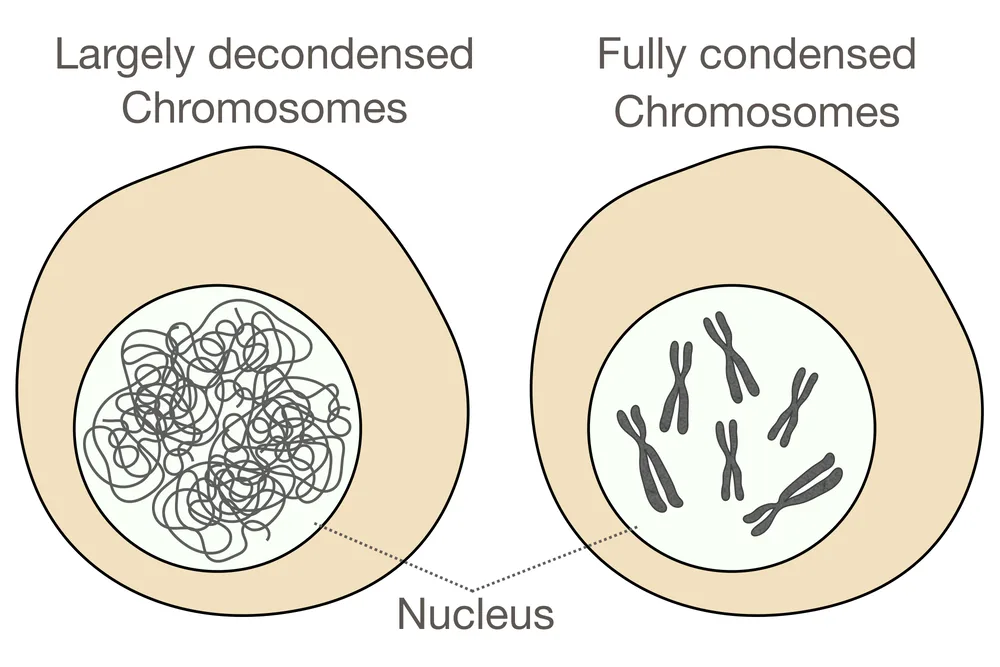
Most of the time, eukaryotic chromosomes, which are located in the cell nucleus, are not fully condensed, but rather (partly) decondensed. Stretches of open (decondensed) chromatin are called euchromatin, whereas condensed segments are called heterochromatin. Euchromatin is easily accessible and active, while heterochromatin is closed and inactive. Fully condensed chromosomes are only present immediately before nucleus and cell division, which will be discussed in the next section.